Table of Contents
Sun, Surf & the Open Road: The Spectacular East Coast of Australia
From golden surf beaches and tropical islands to ancient rainforests and coral reefs – come with me on a road trip “walkabout” through the very best of the spectacular East Coast of Australia.
There are plenty of travel blogs that trawl the internet to give you all you can do on a trip. I find them a bit overwhelming. They are often simply an electronic version of the guide book you no doubt already possess or a cut and paste of what you can easily discover through an AI search these days?
All too often, travel blogs with long lists of things to do can leave you feeling somewhat short changed and with a FOMO. Travel doesn’t have to be about seeing it all, doing it all and having the best of everything. An eclectic mix of places to stay and experiences along the way can bring just as much pleasure as the well marketed star tourist attractions that often come with high price tags but fail to live up to inflated expectations.
My aim is to give you an honest view of what we actually did – what worked – and what didn’t – and some practical tips for getting the most out of your precious holiday time and avoiding any potential pitfalls along the way. I try to write the blog that I wished I could have read to help me plan my trip.

You could easily “do” the East Coast of Australia in just a week, fly back home and put a big tick on your bucket list. Here is how that 1 week fly by trip might shape up:
Day 1-3 – Fly to Brisbane
Day 4-5 – Fly to Airlee Beach/Cairns/Whitsundays
Day 6 – Zoom over the Great Barrier Reef in a helicopter
Day 7 – Taxi transfer to Port Douglas – Rainforest Day Tour
Day 8 – Fly home from Cairns
Life is all about choices though and I chose to treble the time allowed taking a total of just over 3 weeks to explore the East Coast of Australia in depth, Travelling is always a learning experience for me and I find that the fun comes as much from the journey as the destination? If you are happy to take the slow road along the East Coast of Australia, then stay curious and come walkabout with me from sleepy Byron Bay past the spectacular surf of the Sunshine Coast all the way up north to the rainforests of Port Douglas. Buckle up – it’s going to be a wonderful journey …
East Coast Australia - The 3 Week ” Walkabout”
I put the itinerary for our 3 week road trip together myself, priced it up and asked 3 travel agents if they could match (or beat) the price because I find that it is so much easier if there is a need to cancel a trip for any reason to have just one transaction to unravel rather than a fistful. Trailfinders came up trumps matching all my hotel choices and quoting marginally below my own calculated price.
As things turned out, I was very pleased to have booked through them as the current situation in Iran and the Middle East meant that we had to change flights at the last minute from Qatar Airlines (via Qatar) to Singapore Airlines (via Singapore). Trailfinders handled this expertly within a few hours with no hassle involved for us.
It helps that we have already visited Sydney so we were able to fly to Brisbane – a bit closer to previously unexplored territory.
This is our itinerary for a 3 week “walkabout”:
Day 1 – Fly to Brisbane
Day 2 – 4 – Brisbane (Brissie) (link)
Day 5 – 7 – Byron Bay
Day 8 – 10 – Gold Coast (Goldie)
Day 11 – 13 – Noosa
Day 14 – 15 Rainbow Beach
Day 15 – Rockhampton (Rocky)
Day 16 – 17 – Airlie Beach
Day 18 – Mission Beach
Day 19 – 22 – Port Douglas
Day 23 – Fly to Darwin to explore the Kimberley Coast
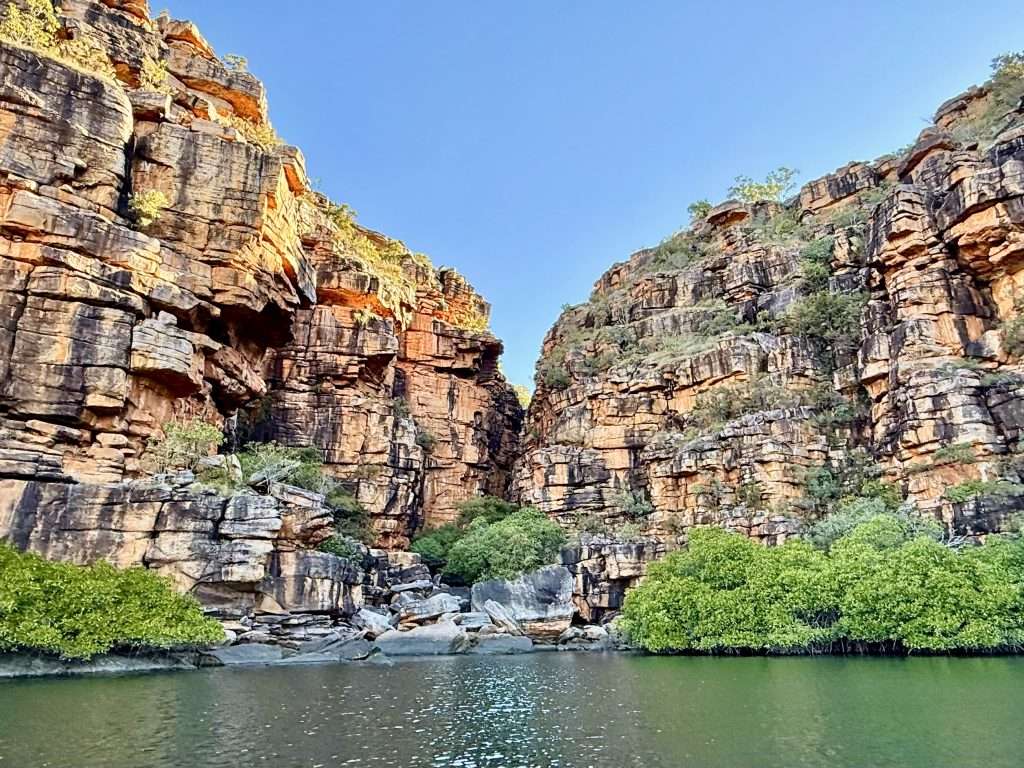
Our East Coast Australia road trip was part of a bigger trip to the Kimberley Coast. The flight from the UK to Australia is long and costly, so it made sense to combine this trip with a 2 week exploration of the red and rugged Kimberley wilderness which you can read about on this post:
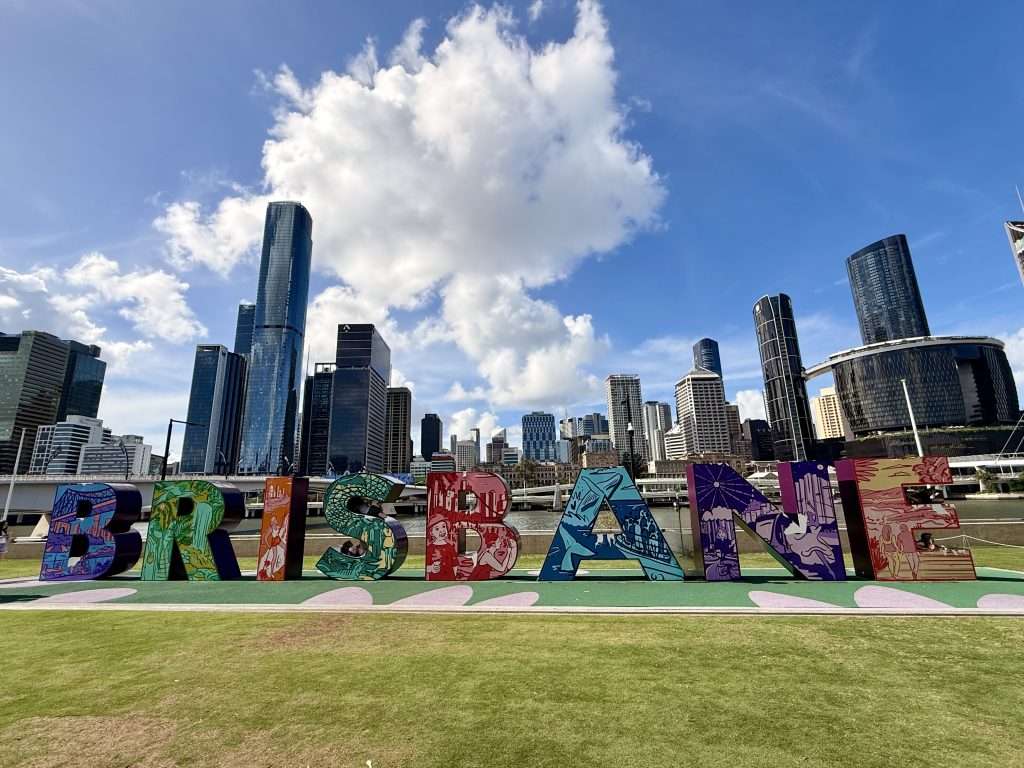
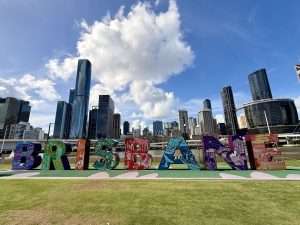
We allowed 3 days to explore Brisbane (Brissy) and I am so glad we did as there is plenty to do in this buzzy city. You can find out more about that portion of the road trip on this post:
After spending a few days in Brisbane, we decided to go south for a little way to explore Byron Bay. This area of Australia has always intrigued me since its bygone hippy days and I was curious to see it for myself.
After Byron Bay, we continued up past Brisbane to the Gold Coast, spending a couple of days with good friends we had made on a cruise to Antarctica 18 months ago. How lovely that a chance meeting on one journey can lead to lots more fun on future trips?
Our 3 week road trip ended in Port Douglas which is just a short distance from Cairns. Cairns is popular with backpackers – nearby Port Douglas is a much better option for more mature travellers seeking a spot of luxury.
Our Kimberley trip started in Darwin (Northern Territories)and finished in Broome – a part of Western Australia we never managed to reach on our previous trip to Oz as it was too far north and the temperatures had soared by the end of October when the hot and steamy wet season begins making travelling too uncomfortable and difficult. You can read more on these posts:
East Coast Australia - Driving Distances/Times
Our trip covered 2,315 kilometres in total. here are the driving times and distances between each of the stops on our 3 week road trip:
Brisbane (Brissy) to Byron Bay – 164 kms – 2.5 hours
Byron Bay to Gold Coast (Goldie) – 100 kms – 1hr 9 mins
Gold Coast (Goldie) to Noosa – 211 kms – 3 hours (leaving at 9.30 to avoid Brisbane traffic)
Noosa to Rainbow Beach – 117 kms – 2 hours
Rainbow Beach to Rockhampton (Rocky) – 470 kms – this took us 5 hrs 50 (without the stop at Maryborough) because of a few slow sections with roadworks
Rocky to Airlee Beach – 483 kms – 5 hrs 22 mins.
Airlee Beach to Mission Beach – 507 kms – 5 hrs 43 mins.
Mission Beach to Port Douglas – 263 kms – 3 hrs 26 mins.
When is the Best Time to Visit the East Coast of Australia?
We timed our visit to the East Coast of Australia to coincide with the start of the dry season in early May. May is late Autumn in the Central and Northern East Coast of Australia which brings pleasant temperatures – rather like a warm Summer in the UK – but with little or no rain and low humidity.
There are a number of other bonuses of travelling at this time too:
- You avoid the Australian school holidays which typically start in late June/July. School holidays bring road congestion, peak prices and parking problems (especially in Noosa).
- The snakes are (largely) asleep.
- Roads are not subject to the flooding problems experienced in the wet season.
- The potentially deadly marine stingers such as Box Jellyfish and Irukandji frequent the waters of tropical North Queensland from November to May. Delaying the latter end of your trip until June avoids this problem, but you obviously always need to remain cautious to this risk. If you do visit in the months when stinger activity is at its worst (Jan to March), you will have to wear stinger suits if you venture into the water.

Temperatures increase as you travel north. As we were going to extend our trip into the Northern Territories and the Kimberley coast, the timing was even more crucial. Our itinerary allowed us to reach the Kimberley at the start of the Australian Winter (June to August) which is the perfect time to visit.
Travelling along the East Coast of Australia in late Autumn has plenty of advantages, but you do need to bear in mind that the sun sets at around 5.30. Just because it is nice and sunny all day, you can’t expect the sun to shine all night as well as all day!
Also, if you want to see whales, you will need to delay the trip until June.
Byron Bay to Port Douglas - Let’s Go “Walkabout”
So – we have come to the end of our 3 day stay in Brisbane and picked up our SUV hire car, The fuel tanks is chocker, the sun is shining and it is time to hit the track and go walkabout in East Coast Australia. Here in Oz – where the ice comes in 5 kilo bags, the ham comes in handfuls and the laughs come in spades, it feels a million miles away from the grey skies and fine rain of late Spring in the UK. We begin our 3 week road trip in sleepy Byron Bay,


Cheer Up Slow Down Chill Out - 3 Days in Byron Bay
Three days in Byron Bay is enough time to allow you to do a couple of excursions and still have time spare to kick off your shoes and absorb the super relaxed vibe Byron Bay vibe. Here is what we got up to on our first walkabout:
Back in the mid 1970s, Byron Bay was known as a hippy town. So many bohemian travellers searching for a laid back lifestyle fell in love with the relaxed vibe of Byron Bay. Originally aiming only to pass through for a few days, many ended up staying for weeks and established an eclectic array of hippy communes and humpies, barely distinguishable from the surrounding bush. The little town soon became a mecca for lentil-eating, tambourine-shaking idealists set on abandoning their parents’ rules and regulations and living in a land of freedom, peace, harmony and love. The beautiful surfing beaches formed the ideal backdrop for their new life – “bloody beaut mate”!
The years rolled by – as they do – and many of the hippies that made Byron Bay their home back in the 1970s are now grandparents. Their children and grandchildren have largely shed the hippy lifestyle favouring instead houses with all the mod cons: open plan kitchens, electric showers and air conditioning. The days when you relied on the sun to heat up the water in your bucket before you could take your shower are now largely a thing of the past. The hippies of yesteryear have now become yippies – a modern cross between hippies and yuppies.
These days, Byron Bay’s beautiful surfing ibeaches are particularly popular with backpackers who love its “anything-goes” lifestyle. There is also an increasing appeal for honeymooners, families and holidaymakers like us – looking for a spot of luxury.
You can still find hippy communes in nearby Nimbin, but we chose not to visit after reading reports of drug problems in the town.

Sea Kayaking with Dolphins
A half day sea kayaking with dolphins is a great way to acquaint yourself with Byron Bay’s surf and the dolphins who make it their playground. We booked a tour with Cape Byron Kayaks and really appreciated their skill helping us to navigate the awesome surf to get out into the ocean. They had a pretty relaxed approach when a couple of copper sharks joined in the fun. They are not dangerous to humans we were assured – well most of the time – we survived to tell the tale anyway. There are no photos as balancing a phone while trying to navigate the waves and keep the sharks at a safe distance took all my concentration. You will just have to take my word for it that it was an altogether thrilling experience,

The Cape Byron Track
I always like fitting it some hiking as we travel and Byron Bay is a great place to do it. The Cape Byron Track is a 3.7 – 5 kilometre (1-3 hours) loop trail around Australia’s most easterly point. Highlights include sub tropical rainforest and clifftop views of the ocean allowing glimpses of dolphins, whales (in season) and sea turtles en route. If you want to shorten the route, there are multiple entry points to the 3 kilometres of gorgeous beach bordered by sand dunes and rich coastal heath including Captain Cook Lookout, The Pass, and Wategos Beach.
Hidden Gens - Tallow Beach
Many visitors to Byron Bay spend all their time at Main Beach – and it is easy to see why. If you want to escape from the hustle and bustle of the growing holiday town though, seek out secluded Tallow Beach. The $AUD 5 parking charge is a good investment for a little peace and tranquility.
We picked up the Cape Byron Track at Cosy Corner on Tallow Beach which allows you to visit the white icon of Cape Byron Lighthouse and the excellent Museum there. The Arakwal National Park is now jointly managed by the Bundjalung People of Byron Bay, NSW National Parks and the Wildlife Service (NPWS). Arakwal is an important part of Aboriginal heritage and is a haven for migratory birds and animals.


Lennox Head to Ballina Track
Beginning in Ballina, the stunning 11,5 kilometre Coastal Recreation Path allows walkers and cyclists to explore some of the region’s most stunning natural and cultural landscapes. The entire length of the path is 11.5km but it can be done in shorter sections. This scenic route showcases uninterrupted beach views and rich cultural heritage — a harmonious blend of sea breeze and storytelling. Recommended sections include: Shaws Bay Loop (3.1 km), Sharpes Beach to Pat Morton (3km ), Lennox Head to Pat Morton Lookout (1.2km) and the Aboriginal Cultural Ways (2.5km). Having a car makes it easy to get to the start of each section the trail.
Belongil Beach
We also spent a little time relaxing on Belongil Beach which had a private access from our chosen base in Byron Bay – Elements of Byron (see Where We Stayed below).

Byron Bay Fauna - How to see a Duck Billed Platypus
Duck billed platypuses are nocturnal meaning that the best chances for a sighting are at dawn or dusk. Our last day in Byron Bay gave us the perfect opportunity to get up before dawn and go in search of this notoriously shy mammal. Tucki Tucki Creek – a freshwater creek in Tucki Tucki Nature Reserve located in Goonellabah, New South Wales – offers opportunities to spot platypus in their natural habitat. Bubbles and small circles on the water’s surface indicate where a platypus might be hanging out.
With the expert guiding help of Wendy, we saw three platypus on our early morning walk. A tour can be booked through Viator.

G’Day Goldie - 2 Days in Gold Coast
Gold Coast – or Goldie as it is affectionately known – is a resort city made up of dozens of smaller beach areas strung along expansive stretches of white sand and has some of the best surfing in Australia. Surfer’s Paradise is at the heart of all the action. Gold Coast is where young Australians flock to party and have fun every summer and there are plenty of bars, night clubs and activities designed to accommodate them. If you are travelling with kids in tow, Goldie is also packed with all kinds of tourist attractions, including theme parks like Wet ‘n Wild and Dreamworld. If you are looking to have fun, then Goldie is just the place to do it.

Currumbin Wildlife Sanctuary
I gave the theme parks a miss but enjoyed a visit to Currumbin Wildlife Sanctuary. Wild lorikeets arrive at Currumbin Wildlife Sanctuary daily at 8am and 4pm. You can attract a queue of these beautiful rainbow coloured birds with a handful of their favourite food and allow them to feed from your hand – and even land on your head. The sanctuary volunteers prepare a specialised veterinarian approved artificial nectar mix which is perfect for the lorikeets’ specialised digestive systems.
The sanctuary also have their own wildlife hospital with huge glass windows so you can see all kinds of animals being operated on. If you have enough time, it is worth asking when viewing can be arranged.


Gold Coast Hinterland - Tamborine Mountain
If you want to escape from all of the activity for a bit, drive out of town up into the Gold Coast Hinterland where Tamborine Mountain provides a welcome cooler and more peaceful place to take in the views and chill out for a while.
Tamborine Mountain hosts several rotating markets, with the largest being the Tamborine Mountain Country Markets on the second Sunday of the month. For fresh produce, you can also visit the Local Producers’ Market (The Green Shed) every Sunday.
Tamborine Mountain Pitstop - St. Bernard's Hotel
A great place for lunch/dinner with great views is the St. Bernard’s Hotel. Reservations are essential on a Sunday. When we visited, live music accompanied our mountain top lunch. The hotel has a relaxed family vibe.
Hidden Gem - Surf Life Saving Club
A popular place for a pub-like meal – particularly in the Gold Coast – is the local Surf Life Saving Club at Surfer’s Paradise. You’ll see clubs like these dotted all along the Queensland coastline. Mostly aimed at local members, they nearly all welcome in tourists (with sign-in at the door and sometimes a small entrance charge). It’s a very Australian experience and a hidden gem if you like beer, local live musicians, ridiculously big portions of chips and watching the sport on TV while you eat.
An Up-Market Vibe - 3 Days in Noosa
Upmarket Noosa is where many Aussies living in the south of Australia (Melbourne, Victoria and Adelaide) like to escape the cooler Winters and find some sun. It can get very crowded at peak times – particularly in the school holidays – so it is wise to find accommodation close to town with parking and leave the car behind for the duration of your stay. You might want to lock your credit card away too – Noosa’s Main Street is lined with trendy shops stocked with high end fashions and luxuries with correspondingly high price tags. There is plenty to do in and around Noosa, so a 3 day stay makes sense.
Noosa National Park - Noosa Heads - Hidden Coves and Fairy Pools
We spent a relaxing first day in Noosa hiking the Noosa Heads National Park Trail. The trail starts in town and heads out along the spectacular coast. The surf is truly breathtaking here and watching skilled surfers navigate the rolling waves is strangely mesmeric.

This is a walk with plenty of interest along the way too. You pass several landmarks including Boiling Pot,Tea Tree Bay, Dolphin Point, Granite Bay, the idyllic Fairy Pools and eventually, spectacular Hell’s Gate.


As well as marvelling at the surfers along the route, keep an eye out for ospreys, pied cormorant, dolphins and an astonishing variety of wildflowers. Be warned, yellow faced whip snakes inhabit shady rock crevices on beaches like Granite Bay on the Noosa Heads rail.


We explored Alexandria Bay for a while before heading back on the inland trail through the forest. The walk was fairly busy close to town, but by the time we reached Alexandria Bay, we had the trail to ourselves and walked alone back through the deep forest with only a passing very well camofluaged monitor lizard for company.


The Ultraman Australia
The Ultraman Australia – a 3-day, 515km (320-mile) ultra-endurance triathlon which starts and ends at Noosa Heads Surf Lifesaving Club.- was in progress while we were staying in Noosa during the second week of May, so we were lucky to see some of the brave contestants cross the finish line after our walk. The 3 day race features a 10km swim ,a 420 km bike ride and an 84.3 km double marathon run. It is an invite-only, competitive endurance event restricted to 40 athletes and has a strict 12 hour daily cut off limit. Congratulations to the winner – Kiwi Mark Thomson – who finished the race with an amazing time of 22 hours, 45 minutes, and 21 seconds. It takes your breath away!

Noosa Everglades Cruise and Canoe
No0sa is one of only two areas in the world to have Everglades. Florida USA is the only other place where this unique environment exists. Everglades are shallow, slow-flowing aquatic ecosystems with vast expanses of tall sawgrass. The Noosa Everglades is a pristine, 60 kilometre stretch of winding waterways and wetlands located in Queensland’s Great Sandy National Park.
The area is also known as the “River of Mirrors” because the dark water – stained by the tannin from the surrounding tea trees – creates a perfect reflection of the sky and the overhanging vegetation. You can see now why Noosa got its name which originates from the local Aboriginal Kabi Kabi word noothera or gnuthuru. In English, Noosa translates to “shadowy place”. The Everglades spans two UNESCO Biosphere Reserves (Noosa and Great Sandy) and boasts an incredibly high concentration of Australia’s bird species.


A great way to experience this unusual habitat is by canoe. Everglades Eco Safaris run a tour with pick ups at Noosa hotels. After the bus journey to Habitat Noosa Everglades Eco Camp, the cruise begins by boat on the tea-tree coloured waters that lead to the Everglades. Paddling for 5 kilometres is a such a peaceful way to explore these serene hidden waterways inaccessible by any other means. We spotted kingfishers, cormorants and sea eagles on our journey, but the highlight was a koala perched high up in a eucalyptus tree fast asleep in his natural habitat. We saw plenty of koalas up close at the Lone Pine Koala Sanctuary in Brisbane, but somehow there really is nothing to rival seeing wildlife in its natural habitat?
In the shaded, watery world of the Noosa Everglades where animals and birds are king, a deep sense of calm pervades. The soft breeze and the occasional splash of water from the paddles cools our skin as we pull the paddles against the water to gently propel ourselves forward. Gazing up at the towering rainforest canopy while listening to birdsong, it is as if time is standing still. There are very few places left like this in the world these days and I feel privileged to be able to enjoy it.


The encounter with a goanna (monitor lizard) at picnic time at the halfway point of the cruise on the shore was not quite so peaceful. We saw the goanna at a distance at the start of our picnic but were so distracted by a bush turkey that wanted to share our muffins that we failed to notice it ambling towards us at what must have been a surprisingly fast pace. By the time we noticed it, it had its mouth wide open and was raising its tail – a sure sign of aggression. We moved away as quickly as we could to avoid any risk of this quite fearsome looking creature mistaking us for a tree and attempting to climb one of our legs – or – even worse – fix itself on our heads. They are not deadly, but they do have a nasty bite and can also attack your legs with their strong spiky tail.

A talk with some of the local people opened our eyes to the ongoing difficulties between white Australians and the indigenous aboriginal people in this part of the world. Many have assimilated into mainstream society, but others prefer to continue to live as they have done for thousands of years, free of what they regard as modern day restrictions and in harmony with nature. There are many ongoing battles about indigenous land claims which seem unlikely to be resolved any time soon.

Back at the to Habitat Noosa Everglades Eco Camp, we saw lots of kangaroos and kookaburras. The kookaburras have a habit of diving down to snatch food. They are big birds, so this can be quite frightening. We heard many shrieks from neighbouring tables as a kookaburra repeatedly tried diving for a camper’s sandwich.
Noosa Pitstops
Noosa has a plethora of good restaurants, so choosing is the only problem you have. I can definitely recommend Bistro C which was so good on the first night that we booked ahead for the next day when they served their specialty slow cooked lamb dish. You definitely need to reserve in advance if you want to be sure of securing your portion – they sell out very quickly.


Noosa’s Surf Club is also a great place for drinks, lunch or dinner. You have a great view of the sunset over the beach from here, but be sure to arrive no later than 5.30 is you want a prime position with a waterfront table.
There are upwards of 58 Surfer Supporter Clubs in Queensland. These not-for-profit organisations do a marvellous job providing lifesaving services, community education, membership services, surf sports, fundraising and commercial training which all contribute to their vision of zero preventable deaths in Queensland public waters. It is nice to know as you tuck into your meal and enjoy a beer or two that you are supporting a really good cause in the process.

Noosa to Rainbow Beach
The 2 hour drive from Noosa to Rainbow Beach is a good example of how the journey can be every bit as much of a part of a holiday as the final destination. The road signs along the way warn you to give way to koalas (although this is increasingly unlikely as they are becoming endangered as their only food source is the eucalyptus tree), horses, cows and – particularly between dawn and dusk – kangaroos.


The.scent of roasted macadamia nuts for sale by the roadside waft through the air conditioning vents as we pass by houses built on stilts known as “Queenslanders”. The architectural style was developed in the late 19th century to cope with the state’s intense tropical climate and unique environmental challenges. Raising the houses up from the ground maximises natural cooling, prevents flood damage and protect against termites, ants and snakes. The stilts also allow builders to construct a level home on steep slopes without expensive earthmoving or digging into unstable soil which is a boon in Queensland’s hilly and rocky landscape.


As we drew close to Rainbow Beach, we took a detour to Tin Can Bay to scope out the arrangements for seeing dolphins there (see below). Neighbouring Cooloola Cove with streets lined with modern, low rise, brick houses with roofs almost entirely covered in solar panels and generously sized lawned yards was interesting to drive through too. This fast growing settlement provides an affordable alternative to increasingly costly Noosa and is attracting a growing number of older people and retirees
Chasing Rainbows - The Magical Colours of Rainbow Beach
Rainbow Beach, Queensland, is a coastal paradise renowned for its vibrant rainbow coloured sand cliffs and easy access to World Heritage listed Fraser Island (K’gari) The Coloured Sands – one of Australia’s most extraordinary geological wonders – contain as many as 72 different colours of sand created over many thousands of years of weathering and erosion. The sands get their rainbow colours from heavy concentrations of minerals. Yellows, burnt oranges and vibrant reds are created by rutile, zircon, ilmenite, and monazite. Chocolate brown, rust, gold and deep red earthy tones come from varying levels of iron oxide. Where nutrients and minerals have been leached away over time, white and silver shades are generated to enhance the colour palette. At sunrise and sunset when the low angled light ignites the cliffs, the sands take on a glow as they shift from rose gold to violet as the light changes – truly a photographer’s dream.

Between 1965 and 1976, the US undertook commercial mining of the heavy mineral sands at Rainbow Beach using the ore for aerospace and nuclear applications and a number of other profitable applications. Mining was eventually halted following the recommendations of the Fraser Island Environmental Inquiry.
Rainbow Beach is a small town with just one main street – Rainbow Beach Road – which houses the majority of its few restaurants, shops and services. Tourists swell the 1200 population to 11,000 or so in peak school holiday periods and the beaches fill with people. Thankfully when we visited, it was a quiet and peaceful little town.
Beach Walking
The relatively short driving distance between Noosa and Rainbow Beach means you have plenty of time to explore the area on the day of your arrival if you make an early start. We made the most of it by picnicking on the beach and spending the afternoon walking along the rainbow coloured sands finishing with a sunset stroll to the Carlo Sand Blow. The laid-back, friendly vibe at Rainbow Beach made it one of our favourite destinations on this trip.

Souvenir I’m Glad I Bought - A Beach Bag
The little row of shops along Rainbow Beach Road proved to be the perfect place to buy a beach bag. It cost about half the price of the swanky shops in Noosa and was put into good use straight away.
The Spa on Rainbow Beach Road – still run by the original owners – gave service with a smile as they sold a life saving replacement car key battery which they also took the time and trouble to fit for us. That’s Australians for you – always happy to help each other out and lend a hand.


Carlo Sand Blow
The Carlo Sand Blow is a huge sand dune offering spectacular sunset views over Rainbow Beach, Tin Can Bay, the Great Sandy Strait and Double Island Point. Aim to arrive at least 30–60 minutes early to secure a good viewing spot and watch as the colours begin to shift. The Carlo Sand Blow can be accessed via an easy 10-minute (approx. 300m) walk from the Cooloola Drive Trailhead through light forest to the dunes. Bring a torch (or use the one on your ‘phone) to walk back after dark.
Feeding the Dolphins at Tin Can Bay
An early start the next day allowed us to call in at Tin Can Bay before joining the 4 wheel drive tour to participate in the daily dolphin feeding at 8am. Queues start to form from 7,30 – especially at weekends – so you do need to be there early as tickets are strictly limited to comply with the strict regulations in force to control feeding of wild dolphins.
Tin Can Bay‘s wild dolphin history began in the early 1950s when an injured dolphin, nicknamed “Old Scarry,” was befriended and fed by local fishermen near Norman Point. Old Scarry” disappeared in the 1980s, but a female, thought to be his daughter, continued to visit. A new calf, nicknamed Mystique, began visiting in 1991 and became the most well-known of the dolphins, often bringing other dolphins with him. Over the years, the dolphin feeding has evolved into a licensed, volunteer-managed feeding program at Barnacles Dolphin Centre, showcasing a unique, multi-generational bond with rare Australian humpback dolphins.


During the 2020 Covid pandemic lockdowns, when feedings were restricted, Mystique drew attention by bringing items such as bottles, shells, and coral to the shore balanced on his nose. It seemed that the playful dolphin enjoyed the pleasure that this gave the humans with whom he was interacting on a daily basis, In June 2020, photos showing Mystique delivering a pair of sunglasses – which he appeared to be actually wearing when surfacing – went viral and increased visitor numbers further.

Adrenalin Rush - Take a 4 Wheel Drive Along Rainbow Beach
There was no difficulty for me deciding how to spend our second day at Rainbow Beach. Taking a 4 wheel drive along a beach has been on my bucket list since my first trip to Western Australia and today was the day to tick it off. As well as a 4 wheel drive vehicle and the experience to drive it along the beach and through the rainforest, a permit is also required to drive in the Great Sandy National Park, so we opted to be driven by an expert for this tour.
Around a car a week gets bogged or are lost to the tide at Rainbow Beach and its infamous Mudlo Rocks. Cars are frequently swallowed and swept away by the surf due to misread tides and soft sand. This was no place to test out our fledgling beach driving skills, so we pre-booked a half day (4 hour) tour with Surf and Sand Safaris with a pick up from our hotel which made everything very easy.


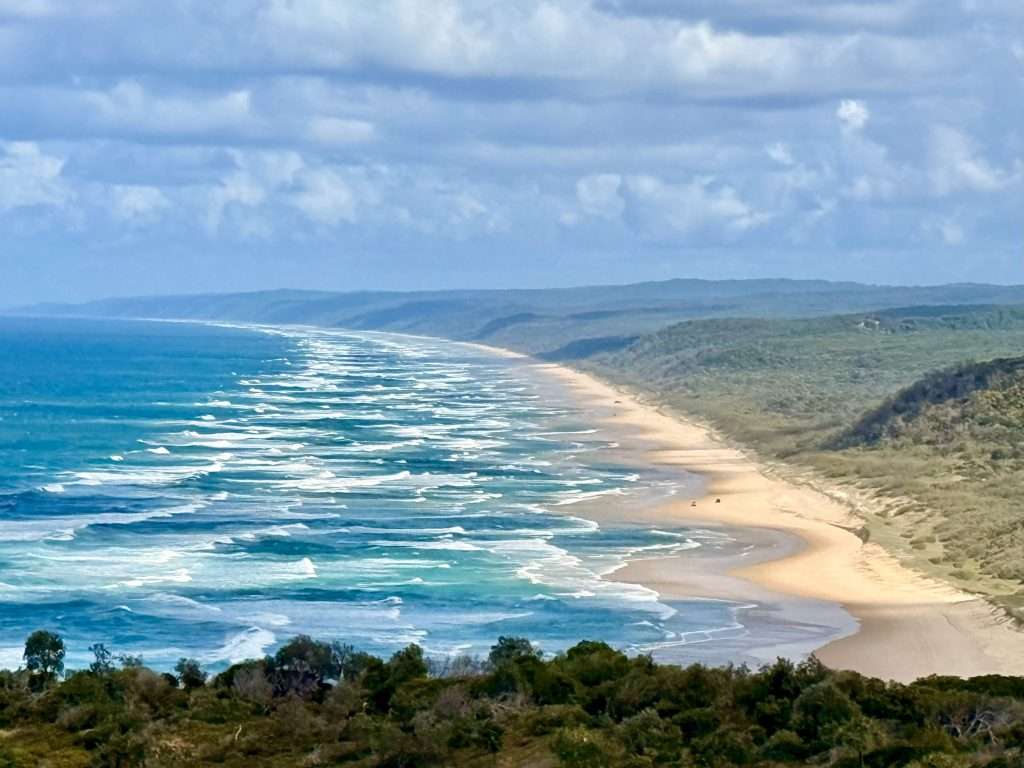
The tour covered 50 kilometres starting at Rainbow Beach and driving across the world famous sands which stretch a full 23 kilometres. The southern end of the beach transitions into Double Island Point. The lighthouse there offers breathtaking 360-degree views across the Coral Sea. We were able to drive right up to it on the tour as the operators have a key to the road gate. Without this, we would have had a long and arduous walk up in the heat of the day.
Green sea turtles and loggerhead turtles nest along the Cooloola Coast at Rainbow Beach and Teewah Beach. The nesting season is November to April. You are also likely to spot dolphins, manta rays, soldier crabs, countless birds and whales here. The whale season is June-October.

The tour also took us to Honeymoon Bay – a saltwater lagoon which was home to hundreds of tiny crabs Towards the end of the beach section, we came across a beach wormer. The worms are a lucrative catch – they are used as premium fishing bait because they stay securely on the hook and release a potent scent in the water that fish cannot resist. Beach worms are highly sought after by beach, estuary, and rock anglers Live worms fetch as much as $3 AUD – $4AUD each. This is bug business – a highly skilled, licensed commercial beach wormer can expect to make anywhere from $1,000 to over $3,000 AUD per week, depending on the season, weather conditions, and market demand.


The tour finished with a memorable rainforest drive through the depths of the Great Sandy National Park which really put the 4 wheel drive vehicle through its paces. Exhilarating.
Fraser Island - K'gari
Double island Point is the gateway to Fraser Island now known as K’gari. The island’s name was officially changed back to its traditional indigenous title to respect and acknowledge its original custodians, the Butchulla people. In the Butchulla language, K’gari translates to “paradise” .
K’gari is accessible by 4 wheel drive vehicles only, for which a permit is needed. Dingos inhabit the island as do the highly venomous Queensland funnel-web spider and the redback spider. A Canadian woman was sadly taken by a dingo the week just before we visited Rainbow Beach. The dingos and spiders were enough to put me off camping on K’gari, but I include it here in case you feel a road trip through the East Coast of Australia is incomplete without it.

Fire Ants
Fire ants are unfortunately one of the other notable nasties of the Rainbow Beach Region. If their nest is disrupted, hundreds of ants will rapidly rush to the surface, swarm aggressively, and repeatedly sting anything in their path. This aggressive, invasive species of ant is a real problem in South East Queensland. Further north, electric ants cause similar problems.
Both fire ants and electric ants are serious invasive pests and their control is heavily regulated. The queens reside deep within nests and underground, so the only successful eradication methods are specialised, slow-acting protein or insect-growth-regulator granular baits that worker ants carry back to feed the queen. You can see warning signs for areas that are under treatment in several places around Rainbow Beach.
Rainbow Beach Pitstops
Rainbow Beach is a tiny town – if you are looking for a fine dining experience, you won’t find it here. One of the locals joked that the main dish on the menus is chips and chips and that fine dining can be found 900 kilometres south (i.e. Sydney!).
Fine dining it is not, but for dinner, The Deck at Sea Salt is hard to beat. Al fresco cocktails, tapas or traditional style food are all available. Rainbow Beach is a tiny place though, so it is best to book ahead to secure your spot at this popular hangout. I can recommend the Tomahawk steak for 2 to share. In common with many establishments in Australia, note that there is a 15% surcharge on weekends/public holidays.

Rainbow Beach to Rockhampton (Rocky)
There were a couple of really long drives on our itinerary and this was one of them. The 477 kilometre drive can be done in just over 5 hours but roadworks meant that it took us nearer to 6 hours in practice. Most of the time was spent on the long, straight as a die Bruce Highway.
Built in 1934, the Bruce Highway coastal artery spans over 1,670 kilometres. Now that really is a LONG road! I have never seen so much sugar cane in my life – it lined both sides of the road as far as we could see for the bulk of the journey.


Country music kept us awake as road signs warned of the Fatigue Zone with frequent reminders to “ Survive This Drive “. After a while, they gave way to a series of trivia questions to answer as you drive with the cheerful reminder to “Keep Playing It May Save your Life”. Trucks with huge bumper bars to fend off the kangaroos, exhaust stacks twisted up the sides to avoid rocky terrain/flooded roads and equipped with high frequency radio to call a buddy for help in emergency kept us company all the way along the route.
The Portside Café - Maryborough
The Portside Café & Restaurant at Maryborough provided a fabulous place to break the journey for brunch. This place is really popular and with good reason. We hadn’t booked ahead and so grabbed the last table at 8.30 on a Saturday am, so do book ahead if you want to be sure not to miss out,

As well as enjoying a fantastic breakfast/brunch, you can soak up a little of the history of the town of Maryborough from the panels surrounding the restaurant. The building was once the Customs House Residence back when Maryborough was a thriving port town during the Gympie Gold Rush when industries such as sugar, timber and tin began to expand. Maryborough was also a Port of Entry for immigrants from England and Europe.

Maryborough is prone to flooding when the Mary River overflows its banks. The flood marker in the restaurant gardens shows the incredible heights the floods regularly reached. These days, Maryborough protects its Central Business District (CBD) from rising Mary River floodwaters using a $ 6 AUD million mitigation system that includes a temporary 1.8-meter-high barrier, portable diesel-powered pump stations, and underground penstock gates.
Overnight in Rockhampton (Rocky)
A gold rush town founded in 1858 along the Fitzroy River, Rocky has several fine Victorian buildings left from its heyday as a beef rearing and mining centre. A stroll along historic Quay Street is a pleasant way to stretch your legs after the long drive from Rainbow Beach.
Stop off at the Rockhampton Visitor Centre at the southern entrance to town to pick up a Heritage Trail map and view the Tropic of Capricorn Spire. Rockhampton straddles the Tropic of Capricorn. There are 7 life sized Big Bulls dotted around the town modelled on various breeds common to the area. Amusingly. some have been castrated over the years as a prank. Apart from that, Rocky has little more to offer the holiday maker than a convenient overnight stop to break the long drive from Rainbow Beach to Airlee Beach.
Rockhampton Pitstop
If you are going to eat out in Rocky, then it really has to be steak that you are looking for, given the town’s history. You can find decent steaks at the Riverside Restaurant . Come early – like many restaurants we found on our travels along the East Coast of Australia, it closes at 9pm.
Rockhampton to Airlee Beach
Capricorn Caves
Pre booking the first tour of the day at Capricorn Caves is a good move on the long 483 kilometre journey from Rockhampton to Airlee Beach. The Cathedral Tour takes just 1 hour so doesn’t delay your journey too much.
Amazingly enough the Capricorn Caves was originally formed from an ancient coral reef 380 to 390 million years ago. These days, it is a dry cave and is a warm 20 degrees C – so you won’t need to “rug up” (bring a coat) for your tour.
The limestone outcrop is surrounded by—and intertwined with—a unique, water-restricted dry rainforest that thrives among the rocks. You can see tree roots as long as 30 metres reaching down into the cave system in search of water.


The acoustics in the cave are said to be better than Sydney Opera House. Hearing the lyrics of Hallelujah fill the cave as soft candlelight provided a warm glow to the chapel like interior was one of those travel memories that stay with you long after the trip is over. The zig zag exit path from the cave – squeezing yourself between the narrow rock faces – is also a bit of fun, as is the swing bridge.
There are many Flying Foxes (microbes) who make the inside of the Capricorn Caves their chosen home. To be honest though, you are not allowed into the cave where they live, so you only get to experience their presence as a concentrated humming noise. The best place to see flying foxes on our trip was up in the trees in Port Douglas!
Endangered Tectaria Devexa - Cave Fern
The Capricorn Caves are also home to the endangered Tectaria Devexa – or cave fern. This is the only known location where this highly sensitive plant can be found. It grows in very thin pockets of soil directly on the limestone cave walls, relying on filtered light near the cave entrances and high humidity. The staff often refer to it as the “Goldilocks fern” because the climate conditions have to be “just right” for it to survive.

Hidden Gem - Clairview Dugong Sanctuary
Another convenient point to break the long drive and stretch your legs a little is the Clairview Dugong Sanctuary which can be easily accessed straight off the highway and is free to visit. If you are lucky, you might see a dugong basking on the beach as soon as you arrive – there have been many reports of visitors doing just that. Our luck was unfortunately not in today though, but a short beach walk with reasonable public toilet facilities was welcome.

Sails and Sunsets at Airlee Beach
Airlee Beach is the main gateway to the 74 predominantly uninhabited Whitsunday Islands, 32 of which are protected as National Parks. The town has a backpacker vibe – a sharp contrast to the plethora of million dollar yachts bobbing about in the marina.

We only had 1 day in Airlee Beach which with hindsight wasn’t long enough. We had chosen the Coral Sea Resort for our 2 night stay (see Where We Stayed below) which would have made a fabulous base for a longer stay to refresh ourselves between the long drives. We only had time to explore the town of Airlee Beach briefly, admiring the expansive lagoon in the centre of town and the gardens areas well equipped with several free public barbecues.


This far north, stingers are a real problem in the waters, so you can see why the town built its lovely lagoon area.


Airlee Beach is the hopping off point for trips to the nearby Whitsunday Islands. You can take a boat trip out to one of the uninhabited islands, book a snorkelling trip or fly over the Whitsundays in a helicopter. Our trip didn’t allow us time to explore the Whitsundays which is something of a regret. However, as snorkelling isn’t really my thing and a 10 minute helicopter ride seems extortionately expensive for a fleeting glimpse of the islands from the air, this was never going to form part of our itinerary. A boat trip one of the uninhabited islands would maybe have been kind of fun though if we had had a little longer here – although I am not sure what I would have done on the beach really when I actually arrived there and worked out how to moor my little boat?
Airlee Beach to Mission Bay
Driving from Airlie Beach to Mission Beach covers roughly 507 kilometers (about 6 hours of non-stop driving). This tropical coastal route takes you through rainforests, sugar cane fields, banana plantations and beach towns.
Beware the Cane Train
Sugar cane has been commercially grown in Queensland for centuries. In the late 1800s, South Sea Islanders were brought in – many being blackbirded (kidnapped or deceived) effectively working as indentured labourers. Following the White Australia policies of the early 1900s, British and European migrants took over. Italian, Maltese and Greek immigrants formed highly competitive manual cutting gangs.
In those days, harvesting sugar cane was a physically demanding and dangerous process. The crop was harvested entirely by hand using gruelling manual labour and fire. The process had four stages : The Burn, the Cut, the Top and the Load. First of all, the fields were set alight to clear the ground of weeds, sharp leaves and also to scare off venomous snakes. Then, cane cutters wielding heavy cane knives cut off the cane at ground level. The leafy green tops were then rapidly chopped off before the heavy stalks were loaded manually into horse-drawn drays or small rail trucks.
Mechanical harvesters took over in the 1960s. These days, between June and December, giant, GPS-guided combine harvesters are driven over the rows of sugar cane removing the leafy tops as they go and simultaneously cutting the stalks at ground level. The stalks are then mechanically chopped into shorter 30-centimeter pieces called “billets” whilst the leaf matter is blown out the back of the harvester to be spread across the field as a natural mulch. A haul-out buggy drives parallel to the harvester to collect the billets, which are then rushed out to local mills via haul-outs and narrow-gauge train networks.
The mechanical harvesters are so much more efficient – but many people still fondly remember the old days of the “big burn”. Once harvested, the sugarcane must arrive at the crushing mill within 16 hours to prevent the sugar juice from deteriorating and evaporating. The industry relies on a massive logistics network of cane trains and thousands of kilometres of narrow-gauge rail lines.

Road signs all along the highway remind travellers to be CANE TRAIN AWARE. Cane trains run 24 hours, 7 days a week in the harvesting season and DO NOT STOP. The cane trains always have the right of way at road crossings. Drivers need to be on the look out for flashing lights, stop signs and give way signs at level crossings on major roads.
Don’t Move the Bananas!
As you move further north, road signs here warn you not to move banana plants. Far North Queensland is where the majority of Australia’s commercial bananas are grown. .Strict regulations on moving banana plants in and around the Mission Beach area are enforced by Biosecurity Queensland to prevent the spread of devastating pests and diseases and strict penalties apply.

Townsville
You can make the most of your road trip by breaking up the drive with a few stops en route. First up, stretch your legs at The Strand in Townsville – a 2.2km oceanfront promenade with cafès and water parks. Townsville is also the gateway to Magnetic Island which is reachable via a Sealink ferry for a day trip to hike the Forts Walk and spot wild koalas. We didn’t allow an extra day for this in oir itinerary, but it is a possibility if you have sufficient time.
Must Do - The Frosty Mango
Located just north of Townsville near Ingham, the iconic Frosty Mango roadside café is a Must Do pitstop. Look out for their colourful signs and enjoy their temptingly wide selection of homemade of tropical fruit ice creams and sorbets.


Hidden Gem - Tully's Golden Gumboot

The 7.9 metre high Golden Gumboot (located in the sugar cane town of Tully, along the Bruce Highway) was erected in May 2003 to celebrate the town’s famously wet climate. It’s height commemorates the record-breaking 7.9m of rainfall the town received in a single year in 1950 and settles the friendly rivalry between the neighbouring towns of Tully, Innisfail, and Babinda, which frequently competed for the title of the town with the highest annual rainfall.


The Golden Gumboot has a spiral staircase inside that allows you to climb to a viewing platform at the top. A white-lipped green tree frog crawls up the side, and the interior walls are lined with historical photographs of severe floods in the district. The intense tropical sun and torrential downpours turned the Golden Gumboot a dirty shade of green at one point, but it was lovingly repainted in 2017 with a durable metallic paint. The photographs inside have to be seen to be believed!


Meet the Modern Dinosaurs - Spot a Cassowary in Mission Beach
Mission Beach is a good place to break the long journey between Airlee Beach and Port Douglas. What it lacks in sightseeing opportunities, it makes up for with huge stretches of glorious sandy beaches and walking tracks through the dense rainforest.
Our Mission Beach hotel was the Elandra Resort Mission Beach (see Where We Stayed below) which was one of our favourites on the trip – another night there would have been lovely. As so much of the cost of a holiday to Australia for us is tied up in the flight, adding another week so that we could have spent a little longer just relaxing and catching our breath along the way would have made good sense. If your time and budget allow, then I hope that is one tip I can happily pass onto you if you are planning your own adventure along the East Coast of Australia. As well as beach and rainforest walks, Mission Beach is also right next to the Tully River, which is home to some of the best white water rafting in Australia.

Spot a Cassowary
Mission Beach is also a great place to spot the prehistoric-looking Cassowaries – the modern dinosaurs that roam the beach and surrounding rainforest. The Elandra Resort has one that is a frequent visitor. The endangered cassowary can be as tall as a fully grown adult and looks rather like a very colourful emu with a bright blue head and red wattle. It is a flightless bird and is the only animal capable of dispersing the seeds of 70 species of trees whose fruit is too large for other species to digest which makes it an important link in the rainforest ecosystem. However intrigued you are, give any cassowary you spot plenty of space. One look at their feet tells you all you need to know about the damage this amazing creature could do to you if it felt the need to defend itself for any reason.

A goanna has also found its home in the hotel grounds – who needs to visit a wildlife sanctuary when it is all on your doorstep in its natural habitat?!

Mission Beach to Port Douglas
As you drive further along the seemingly endless road up into Far North Queensland towards Cairns, the increasing heat begins to demand your complete surrender. This far north, the air settles on you like a giant warm blanket requiring you to give in, to be still and to relax. Until now, this journey has been about trying to squash in as much as possible. The heat was now reminding me that the goal should perhaps not be to do everything but rather to do as little as possible and simply live in the moment.
Those long open roads beckon you to live with more freedom – to loosen up and go with the flow. The indigenous aboriginal people understood well how to respect nature and had their own unique version of spirituality and mindfulness. In the modern world, it is all too easy to lose sight of this wisdom. A journey to the far North of Australia was a timely way to remind myself of it.
Kuranda
A good place to break the long drive between Mission Beach and Port Douglas for a while is Kuranda – the “Village in the Rainforest” featuring heritage markets vibrant street art and wildlife sanctuaries all set in the rainforest just 330m above Cairns. The village dates back over 65,000 years to its original custodians, the Djabugay people. Following the completion of the iconic Kuranda Scenic Railway in 1891, European settlement spurred agricultural and timber development. Kuranda later became a famous haven for hippies and artists in the 1960s, which ultimately shaped today’s bustling market culture. The famous Kuranda Scenic Railway winds its way on a journey from Gimuy (Cairns) via Bubundji (Freshwater), to Ngunbay (Kuranda), the village in the rainforest. Rising from sea level to 327 metres, the journey to Kuranda passes spectacular waterfalls as it moves through the stunning Din Din (Barron Gorge).

You can take the scenic train ride up to Kuranda and ride the Skyrail Rainforest Cableway back stopping to admire the spectacular Red Peak & Barron Falls as you ride. The journey gives you a unique perspective of this ancient landscape with panoramic views Varron Gorge and Australia’s Wet Tropics World Heritage Area. Gliding high above the pristine jungle canopy is an experience you are unlikely to forget.


We caught a train at 11,40 with a return at 3pm which was ample time to explore the village. If you wanted to explore the 3 wildlife sanctuaries (Koala Gardens, Birdworld and the Australian Butterfly Sanctuary), you would need to allow more time.

Foodie Firsts
One of the cafés in Kuranda gave me an opportunity to experience my first taste of crocodile. I had saltwater crocodile bites for lunch. I was pleasantly surprised – it tasted like a rather fishy chicken.

Cairns
Tropical Cairns – once just a boggy swamp – is now unashamedly a busy tourist town offering easy access to the Great Barrier Reef. As the stingers, crocodiles and sharks pile up in the ocean as you travel north along the coast, the town council’s respond by building ever larger safe swimming lagoon areas. Cairns has an impressively huge one, complete with water fountains and fish sculptures.
In my mind’s eye, Cairns has always been a tropical oasis – a slice of paradise that I have long wanted to see with my own eyes. Everyone I spoke to when planning our East Coast Australia itinerary advised me against basing ourselves there though and when I got there, I could see why. It is a backpacker town and – like it or not – I am now a mature traveller who enjoys the luxuries of life and has no appetite for hauling a heavy backpack around and spending my nights under canvas or in hostels.
Tempting as it was, we also chose not to take a snorkel or a helicopter ride over the Great Barrier Reef as part of our East Coast Australia trip. I have snorkelled over a coral reef before (see previous post Ningaloo Reef) and also planned to visit Ashmore Reef in the Kimberley on the second part of our trip to Australia, so I didn’t feel the need to build in more time to include this. Again, if seeing the UNESCO World Heritage-listed Great Barrier Reef is a bucket list item for you, you might want to add in an extra day or two here – or maybe split your time between Cairns and Port Douglas?
The upscale coastal resort town of Port Douglas just around an hour’s drive away from Cairns made a much better choice of a base for the last 4 days of our trip. The drive is only an hour or so – but what a stunning drive it is! The emerald greens and turquoise blues of the Coral Sea soothe the soul as the road unwinds past coconut trees leaning forward obligingly to welcome you.
Port Douglas
Port Douglas has a beautiful beach which is over four miles long. Its Main Street is packed with quirky shops and a plethora of independent cafes and restaurants. If you visit on a Sunday, make sure to check out the beachside markets too. This beautiful corner of Australia is also home to the world’s oldest UNESCO World Heritage-listed Daintree Rainforest. Allowing 4 days in Port Douglas gave us plenty of time to explore in depth.

Hartley’s Crocodile Adventures
I had no real appetite for meeting a wild crocodile in waters that are also rich with deadly jellyfish. Cape Tribulation is well named because it is considered to be one of the most dangerous stretches of water in the world. While its pristine, tropical waters look inviting, they pose potentially deadly threats to those who venture into them who risk meeting saltwater crocodiles, box jellyfish, microscopic irukandji and Great White sharks. However, I really did want to see a crocodile in real life rather than on a TV screen or a picture book. Hartley’s Crocodile Adventures located in Wangetti (between Cairns and Port Douglas) seemed to offer the perfect solution. It has a good reputation for being highly committed to sustainability, holds advanced eco-tourism accreditation and actively integrates conservation, renewable energy and habitat restoration.


Fascinating Fact
Australia is top of the class when it comes to supplying anti venom for snake bites. Hospitals stock plentiful supplies of most of the anti-venoms and also treatments that work universally if you are not sure exactly which snake bit you. Better still, the treatment is free. If you have the misfortune to be bitten by a snake, then you are at least in safe hands in Australia and highly likely to survive. There are only 1 or 2 deaths per annum in Aistralia as a result of snake bites. You are in fact much more likely to die here by drowning in a swimming pool (20-30 fatalities p.a.). By comparison, if a snake bites you in the USA, you will need ready access to $200,000 US or more. Either way, don’t skimp on your travel insurance!
The talk at the snake show at Hartley’s was enough to convince me to purchase a Snake Bandage. They are designed so that the rectangles turn into squares when the correct amount of pressure is applied. How clever?! Such a cheap and easy way of protecting the affected limb whilst you make your way to hospital should surely be part of your essential packing list?


Four Mile Beach Walk
Despite its name, Four Mile Beach stretches for exactly 4 kilometers from the rocky outcrop at the base of Flagstaff Hill in the heart of Port Douglas (near Macrossan Street) south to the mouth of the Mowbray River. The continuous golden stretch of sand is fringed with coconut trees. You will walk past bikes – abandoned by their owners temporarily whilst they take a dip in the ocean – and yoga classes, which are becoming an increasingly popular beach activity here.
When we visited Port Douglas’s Carnivale was in full swing filling the town with live music, dancing and an air of celebration. If you can time your visit to coincide with the last weekend of the Carnivale (22nd to 24th May in 2026), it will add a certain frisson to your time in the town.
Don’t forget to look up at the trees along Macrossan Street – you can’t miss the many Flying Foxes that hang out there!


Daintree Forest - Aboriginal Cultural Experience
Spending 4 days in Port Douglas allowed us enough time to enjoy an aboriginal cultural experience in the Daintree Forest. We booked a full day tour with Walkabout Adventures. This was a definite highlight of our East Coast of Australia trip. Aaron, our guide, was experienced and knowledgeable about aboriginal bush tucker and medicines and shared his knowledge with enthusiasm and great pride. We passed through Mossman en route, which was Aaron’s home village and Daintree Village, where his mum was one of 12 pupils at the village school.


Aaron thrust his hand into a green ant nest to show us how to eat one. They taste like a cross between lemon and lime and can be used to make Green Ant Gin.


The painstaking construction of a green ant nest is a tribute to industrious teamwork!


Aaron doesn’t drink himself, but he explained how Davidson plums are a good hangover cure if you have over indulged a little in the Green Ant Gin. Many more discoveries were made along our walkabout including trying many tropical fruits including Cherimoya (Custard Apple), Red Dragon Fruit, Native Bush Limes and diminutive Sugar Bananas for the first time. The photos give you just a taste of some of the things we experienced on our walkabout day with Aaron.


If you have any difficulty booking directly, you can also book this tour through Get Your Guide.
Port Douglas Pitstops
You are certainly not short of places to eat and drink in Port Douglas., but it is worth mentioning a few of the stand out places we discovered:
Let’s start with Rattle n’ Hum Bar & Grill on Macrossan Street. This is a local favourite and popular with tourists too. It has a relaxed, family friendly, bustling atmosphere and spacious indoor and outdoor seating. You order what you want at the counter and take a buzzer to collect your order when it is ready. Rattle ‘n Hum is famous for its large, wood-fired pizzas, hefty steaks, and fresh local seafood like wild-caught barramundi.
Award winning Melaleuca on Wharf Street has a tempting high calibre menu and is a good place to try Moreton Bay Bugs if you fancy them (which I didn’t!).

Watergate – located down a flame-lit path at 5/31 Macrossan St. features a classy, open-air tropical “secret garden” cocktail lounge that is perfect for a romantic pre-dinner drink. Their kangaroo loin is definitely a main course to consider ordering – highly recommended!

Hidden Gem - The Tin Shed
Located on Dickson’s Inlet (11-17 Market St), the Tin Shed is a beloved, not-for-profit community and sports club offering beautiful sunset views, cheap drinks, a wide selection of boutique craft beers upstairs and live local music on Sunday afternoons. A 1-year membership only costs $5.00 AUD and pays for itself almost instantly through the discounts you receive on drinks and food.


Wicked Ice Cream
How many awards can one ice cream shop get?! When you taste the ice cream at Wicked Ice Cream, you can see just why. it has so may awards on its walls If I had discovered this place on the first day of the trip, I would have chosen to finish my evening there every night. The only challenge is deciding which of the many yummy flavours to treat yourself to.


Learning the Lingo
Aussies and Poms speak the same language – don’t they? Well, it is always easy for someone from the UK to make themselves understood in Australia, but if you want to sound more like an Aussie than a Pom, here are a few useful expressions to have ready to hand:
Pokies – Slot Machines
Arvo – Afternoon
Snags – Sausages
Snot Blocks – A Vanilla Slice
Chicken Parmi – Chicken Parmigiana – A pub classic of chicken topped with tomato pasta sauce and cheese
Goon Sack – The plastic bag of wine that you find in a wine box. Backpackers apparently blow them up and use them as pillows?!
Lollies – Candy
Sparky – Electrician
Chippy – Carpenter
Dunny Diver/Turd Herder – Plumber
Rug Up – Put your coat on
Humbugging – the practice of demanding money, food, or other resources from family members. The term carries a negative connotation inferring that the demands are persistent excessive.

Let’s just have a word about buying a beer on the East Coast of Australia. In the UK, we would usually ask for a pint or a half. Ask for a half in this part of Australia and you will get nothing but a strange look. Beer here comes in Schooners (425ml), Pots (285 ml) or a pony (too small to bother with the quantity!). If all that is in the too difficult pile, just ask for a beer, followed by “a large one” or “a small one” and you will usually get something like you were expecting.
Where We Stayed - Accommodation Reviews
Here is a round up of where we stayed on our 3 week trip – for ease of reference. The accommodation reviews are as honest as I can make them. I hope they help you make your own choices if you are planning your own trip around the East Coast of Australia.
Brisbane - Crystalbrook Vincent - 3 nights
The Crystalbrook Vincent is well located on the Howard Smith Wharves, tucked under the neon-lit industrial curves of Brisbane’s Story Bridge. It has a great Rooftop Bar (closed Mondays and Tuesdays) which has a small infinity style pool as part of the layout.

The hotel features many pieces of modern style art which give it added interest. The restaurant opens out onto the street and offers a good breakfast menu. We sampled much of it during our 4 day stay in Brisbane and were never diasappointed. The hotel also has cycles for hire which is a great way to get around Brisbane.
Byron Bay - Elements of Byron Resort & Spa - 3 nights
Far and away one of the most luxurious hotels in Byron Bay, the Elements of Byron Resort & Spa is perfect for couples. The accommodation is in small villas which allow you to self cater if you want to. You do need a car to do that though – the resort is 2.5 kilometres away from the town.
There are both up-market restaurant and casual dining options available on site. Some of the villas are located quite a distance away from the reception/restaurant area, but the friendly staff are always on the lookout to give you a ride if you don’t want to walk.
One of the best things about the Elements of Byron resort is the access it has to the pristine sands of Belongil Beach, a secluded 2 kilometre stretch of the world-famous Byron Bay beach – perfect for a morning beach walk or a quick dip followed by some down time on the sun loungers.


Noosa - Elysium Noosa Resort - 3 nights
Noosa is an upmarket resort and the Elysium Noosa Resort does its best to fit right in with that vibe. Staff wear chic uniforms that shout “we are a luxury resort” at you! The resort has a huge swimming pool with a swim up bar. The beds are huge and the towels are fluffy and the hotel is perfectly located in the heart of town just 1 kilometre away from the Noosa Heads trailhead.

All that said though, this was one of the most expensive hotels we stayed in and unfortunately was not our favourite for a number of reasons:
- It cost $25 AUD per day to park the car, which we weren’t aware of when we booked. Parking is at a premium in Noosa, so charging is fair enough, but at least make it completely clear that is will be an additional charge?
- The restaurant was not at all busy when we were there, but service was achingly slow at breakfast. An order for eggs of any sort took so long we gave up on day 2. Coffee and tea orders arrived long after brekkie was served too?
- We had to move rooms because of noise disruption from night maintenance works. We were left a card warning us that there would be disruptive early morning noise in our room – why not just book us into a room further away in the first place?
- In the new room, then toilet was malfunctioning and the engineer had to be called.
All in all, we had a pleasant stay at this hotel, but there are other options in town and I think you could find better value to be honest.


Rainbow Beach - Rainbow Ocean Palms Resort - 2 nights
We chose an apartment style hotel in Rainbow Beach as it gave us a good opportunity to spread out a bit, do some laundry and self cater if we chose to. The Rainbow Ocean Palms Resort was a really good choice from that point of view.


The resort operates on an owner rental basis with a manager on site to handle admin and maintenance of the properties. As each of the apartments is individually owned, furniture and maintenance standards will obviously vary. We stayed in Apartment 10 and found it spacious and comfortable for our 2 day stay. The elevated apartment has wonderful views and a balcony where you can get your laundry dry. You can self cater here – there is a good sized kitchen. Bear in mind that the resort is located at the top of a steep hill which is a 15 minutes walk (down!) from the town. You will need a torch (or at least your ‘phone’s torch) to navigate your way back up a very steep flight of stairs followed by a steep climb back to the resort.


I didn’t try out the swimming pool as it owed like it needed a good clean from above! Although it felt hot to us, we were visiting in the Winter, so it is highly possible that the pool wasn’t maintained because nobody was expecting guests to swim at this time of year?

Rockhampton - Edge Apartment Hotel - 1 night
We only had 1 night in Rocky so opted for a simple hotel with secure parking. The Edge Apartment Hotel is located in Rocky’s CBD, just a short walk from the Heritage area. The hotel has its own Indian style restaurant, but we preferred the Riverside Restaurant just next door.
The hotel has a small indoor lap pool (which I didn’t try) and a fully equipped Fitness Centre. The staff were friendly and helpful and the hotel was fine for an overnight bolt hole.


Airlee Beach - Coral Sea Resort - 2 nights
The Coral Sea Resort at Airlee Beach is a lovely hotel and we would have liked to stay a bit longer here. The hotel is well located just a 20 minute flat walk away from the centre of town and has secure underground parking. It has a good sized pool and a small beach area with to die for sunset views. Happy Hour between 3 and 5 gets you nicely into the mood for sunset and the restaurant has a small menu for your evening meal. You need to make reservations and bear in mind that the restaurant shuts at 8pm.


Mission Beach - Elandra Resort - 1 night
We only had 1 night at the Elandra Resort Mission Beach and would have loved to stay longer. We were fortunate to be upgraded to an ocean view room for our stay. The location is idyllic and the service impeccable. There is an à la carte menu as well as a local menu available. The swimming pool is more scenic than a place to swim laps, but looks so luxurious that you can forgive it for not being a place to exercise and just relax and enjoy the view instead.


The hotel has a Cassowary who makes frequent visits and a huge Goanna who hangs out in one of the trees in the resort’s grounds. You can walk down through the rainforest path from the hotel directly onto the beach below.
Port Douglas - Peninsula Resort Hotel - 4 nights
Our last hotel of this section of the trip was the Peninsula Resort Hotel in Port Douglas. The hotel is well located at the end of the main drag – Macrossan Street – and right beside Four Mile Beach.


The ground floor Hi-Tide café restaurant is popular with locals for TO coffee and brekkie/brunch. Residents can enjoy a varied menu of included breakfast packages.
The hotel is an apartment style hotel with 2 rings, dishwasher, microwave and a good sized fridge. Room 15 had a sea view, a pleasant balcony overlooking the beach and a huge deep bath. Sheltered parking is available at no extra charge. Laundry facilities are also available. The service was both efficient and friendly. The café serves only breakfast, but there is plenty of choice of bars and restaurants in Port Douglas just a short step away.


The pool area is looking a bit jaded – no one swam in it during our 4 day stay – but then – it was Winter (despite the heat!)
Glad I Packed
There were a few essential items that I am really glad I packed for this trip:
- A rashie – great for kayaking with dolphins and for the Everglades canoe experience.
- River shoes.
- A wide brimmed sun hat – you just cannot be too careful in this part of the world.
Tips for Future Travellers
There are a few tips about travelling along the East Cost of Australia that might be helpful to you if you re planning your own trip:
- Uber works like a dream here which makes booking a taxi easy if you need one.
- An eSIM is a must. We used Honest Mobile to ensure that we could access essential websites such as Uber, Google Map and What’s App on our trip. without incurring extortionate roaming charges.
- Revolut was a real boon meaning that we didn’t have to carry much cash as we knew we could always access Australian Dollars easily whilst on the road. Transferring any left over currency back to GBP – or any other currency – can be done with a few taps – and for free (except at weekends).
- Time Zones: You do need to be aware that there are 3 main time zones covering Western Australia, South Australia/Northern Territories and Eastern Australia (covering Queensland, New South Wales, the Australian Capital Territory, Victoria, and Tasmania.Whenyouarecrossingboundaries, this can be confusing – especially when you are booking tours where you need to be certain of which timezone you are in to be picked up on time!
You may also like:
If you love Australia and want to read more about our travels there, you can find out more on these posts: