Table of Contents
CASTLES, FORESTS AND WINE - EXPLORE ALSACE IN 7 DAYS
Fairy tale villages of candy coloured houses. geranium filled balconies, rolling vineyards, castles, forest trails and a gastronomy all of its own, so join me to explore Alsace in 7 Days. The itinerary we followed to explore the regions set out below. If you are looking for a little more background information about Alsace before you visit, you may enjoy my previous post:

Alsace in 7 Days - A Road Trip Itinerary
Day 1: Calais to Verdun
Day 2: Verdun to Eguisheim
Day 3: Eguisheim to Turckheim
Day 4: Colmar
Day 5: Turckheim to Kayserberg
Day 6: Kayserberg to Bergheim
Day 7: Bergheim
Day 1: Calais to Verdun
We began our tour of Alsace in 7 days in Verdun, the battle scarred town in the north of France that was the centre of the longest and bloodiest battle of World War I. You cannot escape the sad evidence of the War here for it lies all around you. You drive through villages détruit (destroyed villages that were never rebuilt), past huge cemeteries containing row upon row of forlorn white crosses and stand at the foot of war memorials inscribed with the names of all those who lost their lives here just over a century ago.
A visit to the painstakingly reconstructed Trenches at Chattancourt gives you all the detail you might want to know (and perhaps some you would rather not) about the horrors that were endured in the trenches here during WWI. I will let the pictures speak for themselves.


If you have time, you might be interested in stopping off at the Fort de Douament – a well preserved fort with many stories to tell about the battles that this area has endured over the years. Pause and contemplate for a moment at the colossal Gun Turret which took 3 men 2 minutes to raise a 43k shell and fire it a distance of over 7 kilometres creating a deafening noise and filling the fort with smoke in the process.


Day 2: Verdun to Eguisheim
Eguisheim was easily my favourite villages on our road trip. Bestowed with the honour of being one of the beautiful villages of France, it has a unique layout with streets arranged in concentric circles around the Eguisheim Castle. The charming central square with its stone fountain and colourful Saint Leo Chapel can’t help but have you reaching for your camera. Pick up a leaflet for the circular walk around the villages from the Tourist Office in the centre and follow the trail through the narrow cobbled streets, flanked by the colourful half-timbered houses with balconies over flowing with geraniums that are such a feature of the Alsace region.


If you don’t mind walking up Schlossberg Hill for an hour and a half, then pick up the hiking trail that starts at the camping site “Les Trois Chateaux” in Eguisheim. The trail passes through vineyards, the small town of Husseren-Les-Châteaux, and the forest trail gives great views of the valley and its three ruined 11th/12th century castles en route.
Day 3: Eguisheim to Turckheim
Turckheim makes another good base for a couple of nights (see Where We Stayed) at the foot of this post).
A good stopping off place en route is Hohlandsbourg Castle. I enjoyed it most for the panoramic 360 degree view you get from walking around the top of the castle walls. There is a car park right at the top so if you arrive reasonably early, you can avoid the long uphill walking from the overspill car park lower down.


Turckheim has an interesting little museum – Musée Mémorial des Combats de La Poche de Colmar – which is as much a duty of rememberance then anything else to the Battle of the Colmar Pocket that resulted in the Liberation of Alsace at the end of World War II. The immense collection of carefully curated artefacts on display brings to life this pivotal period of history in a way that no history book ever could.

I was particularly moved by the scant leather sandals that the Moroccan and Algerian troops wore during what was one of the harshest Alsatian winters on record with deep snowfall. This may well have been the first sight these men had ever had of snow? Contrast that to the efficient boots that the opposing German troops were equipped with and marvel at the sheer dedication that must have required to triumph in this war.
The Colmar Pocket Museum opens in the afternoons only after 2pm from September onwards.

Tips for Future Travellers
Recommended Restaurant – Auberge du Veilleur
Turckheim is reasonably sizeable, but many of its restaurants offer little more that tarte flambée and several were closed in the evening when we visited in the first week of September. The Auberge du Veilleur (named after the town’s quirky night watchman who does his rounds at 10pm each night) provided a warm welcome and a menu of hearty Alsatian classics at well as a French style Côte du Boeuf – ideal for 2 to share.
Turckheim is a great place to pick up a some wine to take back home – one of the big bonuses of taking a road trip. We found some temptingly fairly priced fine Grand Cru wine at François Bauer’s friendly Cave du Dégustation in town.


Day 4: Colmar
A day trip to the pretty historic town of Colmar is a Must Do on any visit to the Alsace. It isn’t much fun to drive around it, but it is an easy train ride away from Turckheim. The station is on the outskirts of the village and will whisk you to Colmar in around 20 minutes. Trains run every hour or so (check locally). A day return ticket for the Colmar area is also valid on the bus which we picked up to take us back to Turckheim at the end of our visit as the bus left well before the first train of the afternoon was due (15.26).

Colmar’s ancient colourful, half-timbered houses were thankfully spared the ravages of two World Wars. Colmar has frequently been voted as one of Europe’s most beautiful cities. It has many historic monuments, a renowned and well stocked Art Museum (the Unterlinden Museum) and several typical neighbourhoods set amongst its narrow cobbled streets. Though you will find colourful houses and cobbled streets in many of Alsace’s pretty villages, there are a deliciously large number of them here in Colmar’s Old Town. The canals that flow through the neighbourhood of La Petite Venise give the town plenty of additional photographic appeal too.

If you are interested in wine, the Museum of Alsatian Wines (12 Place de la Cathédrale, Colmar) is a mine of information about the delicious wines of the Alsace region.
Walking is a great way of exploring all the sights the town has to offer. There is a signposted 6-1 km walking trail that follows a 6.1km loop around the city (estimated time: 2.5 hrs). Pick up the free Colmar Old Town Map from the tourist office and follow the golden triangles embossed with Lady Liberty to see all the top Colmar sights.

Another good alternative is to follow on of the walking routes available on the GPSmyCity App. This route leads you through all the top sights on a GPS enabled map which makes it much easier not to lose your way.
Day 5: Turckheim to Kayserberg
Kaysersberg means “the Emperor’s mountain,” and the ruins of the imperial castle that dominate the city are worth the climb to visit.
Albert Schweitzer – Winner of the Nobel Peace Prize in 1952 – was born in Kayserberg. The town has an interesting museum dedicated to his life and philosophy.

Spending a couple of days in Kayserberg gave us the opportunity to take a long circular walk around the town through the deeply forested slopes that surround it. Fine autumn weather made for a lovely leisurely day spotting autumn crocus and large mushrooms en route and winding up back in Kayserberg for a welcome beer (or two) in the evening.


Recommended Restaurant - La Veille Forge - Kayserberg
Whilst Kayserberg has a number of touristy restaurants, a fine French restaurant offering reasonable value is more difficult to find. La Veille Forge is a superb French restaurant and the gourmet set menus with wine pairings are good value as long as you like the choice of dishes included on them. Great atmosphere and slick service too – highly recommended.
Day 6: Kayserberg to Bergheim
The route from Kayserberg to Bergheim ambles through yet more colourful half timbered villages each with something of interest to detain you for a little while.
Riquewihr
Another of France’s most beautiful villages, the little fortified village of Riquewihr has no less than 40 listed Historical Monuments. Follow the town’s walls to visit the village’s three defence towers,

Hunawihr
Hunawihr is the perfect place to see the famous emblem of Alsace: the stork, or ‘cigogne’, which is native to the region. Hunawihr is home to the Naturoparc stork sanctuary which is responsible for reintroducing the stork to Alsace after numbers declined rapidly. You can also see otters, beavers and a number of other animals here in protected, but natural surroundings. It’s a great place to visit with kids.


The stork is thought to be a symbol of fertility and good luck. We spotted two nests during our stay both of which were storkless, which is not surprising given that the nesting season is Springtime.


The storks you are most likely to see here outside the sanctuary are the souvenir variety – everything from key rings to stork hats and tea towels. I confess that I could not resist buying a lovely fluffy stork equipped with a battery operated recording device which enables him to repeat everything that is said to him – however rude it is – whilst wobbling his long fluffy neck. He also rather endearingly repeats the inevitable laughter that his antics generate – he was a must buy souvenir for my little grandson.

Ribeauvillė
The villages of Ribeauvillé makes a good place to pause for a coffee and a spot of people watching. On the day we visited (Sunday 7th September), it was the annual Fiddler’s Festival and the little village was jam packed with people waiting for the grand procession of floats to arrive. Decide for yourself whether you want to time your visit to hit or miss this jamboree.
Day 7: Bergheim
Bergheim was the last point of call on our Alsace road trip. It is a quiet little village – smaller than most of the others on the wine trail. The walk around the village walls is pleasant enough and gives an interesting perspective on the back gardens which alternate between carefully tended potager vegetable gardens and flower filled back yards. There are one or two restaurants in town but they only open on certain days and can also close without notice, so booking is essential if you want to eat out here.
Recommended Restaurant - La Mosaique - Bergheim
We enjoyed a memorable lunch at La Mosaique (+33 3 89 73 77 45) during our stay. One of their specialties is the “Duo” of matafan (a light based pizza type creation) and a choice of delicious salads to accompany it.

Bergheim - Witch Museum
There is a museum in the town dedicated to telling the tale of witches that were put to death in the village long ago, but the opening hours are a bit limiting – we weren’t able to visit during our stay.

We spent 2 days in Bergheim which with hindsight was too long. Ribeauvillé seemed much livelier and may have been a better choice?
Strasbourg
If you have time for a longer trip, Strasbourg is not for away and could well be on your route home. It has a Cathedral, an Astronomical Clock, Market Squares and the potential for a boat trip around its canals with view of the EU buildings where meetings take place alternated between Strasbourg, Luxembourg, and Brussels. Strasbourg is an obvious choice for an EU seat representing as it does the conception of Alsace as an example of European unity.
We were out of time and energy by this stage and the weather had turned against us too, so we saved Strasbourg for a future return visit to France/Germany.
Alsace in 7 Days - Where We Stayed
Here are the hotels we chose as bases during our 7 day road trip:
Verdun - Les Orchidées
Les Orchidées is a handy hotel just off the main road with ample parking, a small garden area, a pool, comfortable modern rooms and a good restaurant. It has everything you need for a stay in the Verdun area – and there is plenty to see here.


Eguisheim - La Ferme du Pape
La Ferme du Pape is well located right in the centre of Eguisheim but with some parking available for €15 per day just behind the hotel – reserve is advance – and ask for clear directions! The hotel has a restaurant serving various Alsatian classic dishes. Breakfast is also served is the restaurant and is buffet style with a hot and cold selection to choose from. The bedroom we had was spacious with an extra bed available if you are travelling with a young family.


Turckheim - Hotel des Deux Clefs
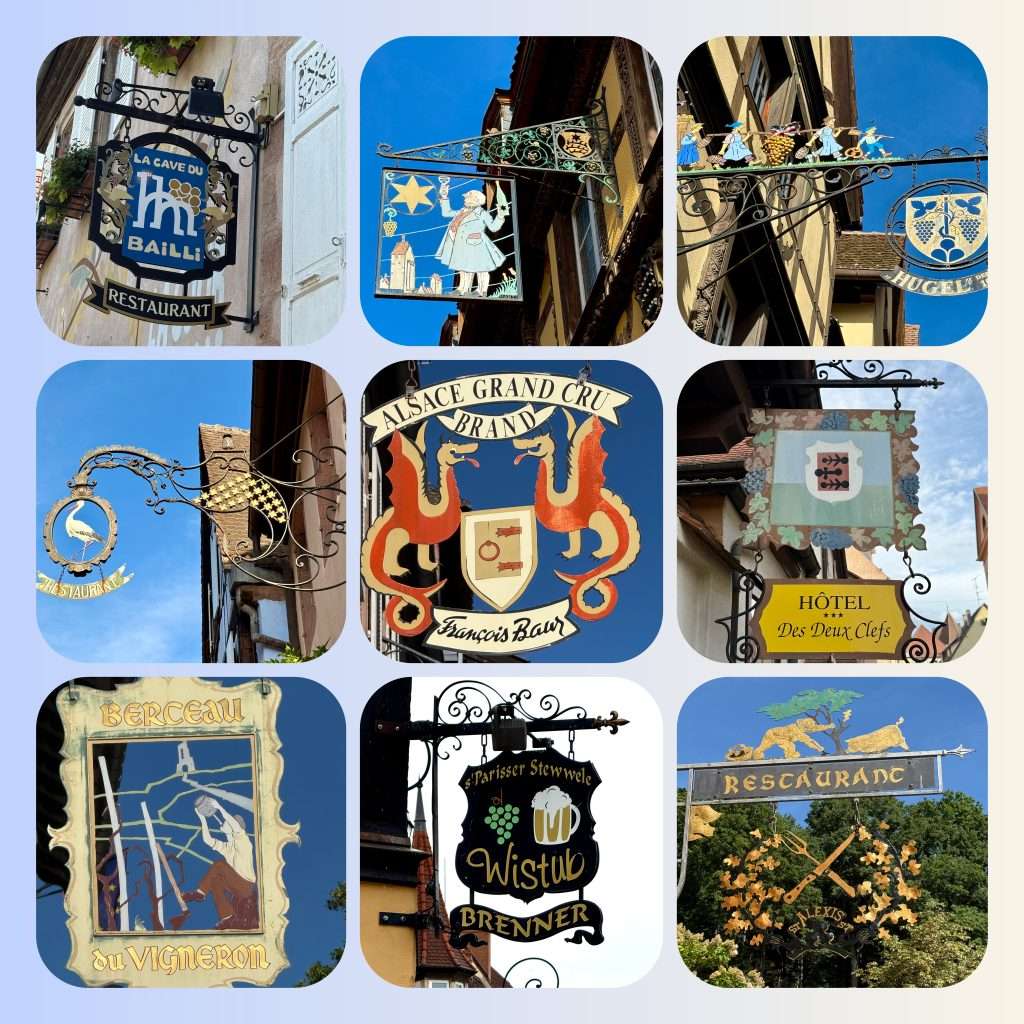
A centuries old hotel in the heart of Turckheim, Hotel des Deux Clefs has plenty of olde world charm. The decor is a curious mix of French and Oriental which only adds to is boutique quirkiness. Our room was rather dark, but had a nice terrasse over looking the centre of the hotel which helped to give a feeling of space. The breakfast buffet is generous with a lovely berry compote, creamy yoghurt, home made jams and a choice of tempting sweet pastries/ cakes. There is no restaurant at the hotel, so advance reservations for nearby restaurants are advisable.


Kayserberg - Hotel Les Remperts
Located on the outskirts of Kayserberg the family run Hotel Les Remperts makes a good base for exploring the surrounding area. Plenty of parking is available too, which is a bonus. The hotel has no restaurant, but Kayserberg has a number to choose from – La Veille Forge in particular is a real treat. The hotel also has some lovely artwork to admire in its public areas. Be warned though, the WiFi is a little patchy at times.


Bergheim - Hotel Residence La Cour du Bailli
Bergheim is not a large village, so there are very few good places to stay. Hotel Residence La Cour du Bailli has a large restaurant with tables also available outside that draw the crowds when the weather is fine. Be sure to reserve a table in the restaurant in advance even if you are resident though as there are very few other reliable choices in the village. The restaurant is closed on Wednesdays and Thursdays. Our room had a useful sitting area which provided a comfortable place to relax on the very wet morning that greeted us on our second day here – our last in Alsace. There is a small swimming pool/jacuzzi area available for residents to use. A simple buffet breakfast is provided in a separate breakfast room adjacent to the main restaurant. Free parking is available on one of the public car parks adjacent to the hotel.


Best Time to Visit Alsace
Autumn is a lovely time to visit the Alsace region. In early September, the grape harvest is in full swing and there is still plenty of warmth in the sunshine. We did have a couple of wet days during our stay, but over all it was dry, sunny and “no sleeves” warm. Eating outside was a pleasure too as the weather was beginning to cool back at home.
You May Also Like
If you love France as much as I do, you may also like these posts:


