Table of Contents
A 6 Day Deep Dive into the Fascinating History of the Normandy Coast
There is more to the beautiful Normandy coastline than you might think – a whole lot more! To fully appreciate what this fascinating region has to offer requires investment of around a week or so of your time – but I promise that if you have any interest in recent history, you won’t regret it. Visiting all five of the D-Day landing beaches in person really brings home to you just what actually happened here in this now thankfully oh so peaceful stretch of the Northern French coastline in a way that no history book ever could. After a deep dive into the history of World War 2, a couple of days relaxing in Honfleur – one of Normandy’s prettiest towns – makes a lovely end to the trip. Read on for practical tips and insider information from someone who has been there and got the ‘T” shirt and is keen to help you plan your own journey to this captivating part of France.
The Normandy Coast WW2 History Tour - Overview
Planning a trip like this requires plenty of advance thought to ensure that you see everything worth seeing but also have sufficient time to absorb all you see and discover and to reflect on it. Our 6 day trip didn’t pan out exactly as we had originally planned it – we had to make some adjustments along the way to achieve the right balance. The itinerary below reflects our experience and achieves a comprehensive deep dive into the region’s history with a generous side helping of R&R which I hope you find useful for planning your own visit.
Getting to the Normandy Coast
We travelled from the UK using Le Shuttle across the Channel Tunnel.
Itinerary Overview
Starting from the port of Calais, this itinerary incorporates :
- All 5 DDay Landing Beaches (Sword, Juno, Gold, Omaha and Utah Beaches)
- The German built Blockhaus in Eperlecques, designed to launch V2 rockets against Britain
- La Couple – another chilling V2 rocket launch site with a wide ranging museum, complete with excellent interactive tablet guides.
- The church and Airborne Museum at Sainte-Mère-Église – the first village to be liberated by the Allies (American Paratroopers in this case) in the early hours of 6th June 1944.
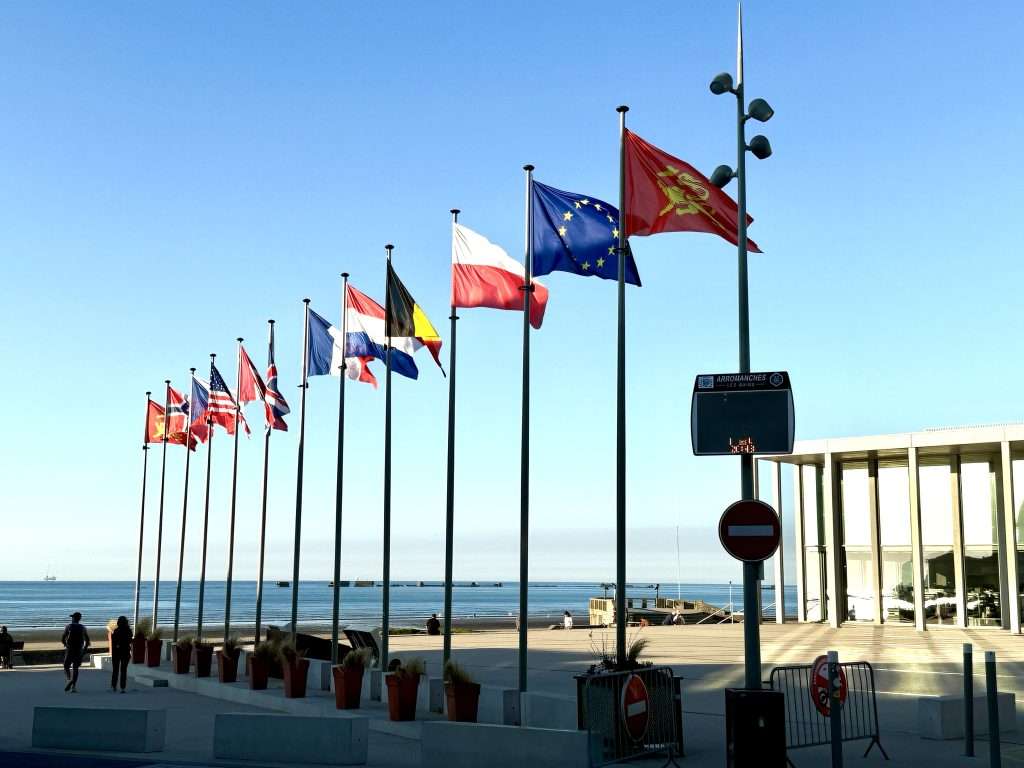
- The 360 degree circular cinema and DDay Museum at Arromanches-les-Bains – site of the secret floating Mulberry Harbour
- Pegasus Bridge – strategically crucial to the overall success of the DDay Landings.
It is a lot to pack into a few days, but there are recommendations for stopovers and pitstops en route to help you get the balance right and a 2 day stay in Honfleur at the end makes a relaxing finale to the trip.
Day by Day Plan
Day 1 - The Secret Weapons
- Arrival in Calais
- Blockhouse d’Eperlecques – 35 mins (35 kms)
- Overnight – Chateau de Cocove 18 mins (12.7 kms)
Day 2 - The British and Canadian Beaches
- La Coupole – Centre d’Histoire 24 mins (25.2 kms)
- Sword Beach (British/Free French)- 2 hr 48 mins (252 kms)
- Juno Beach (Canadian) – 15 mins (13 kms)
- Gold Beach (British) – 15 mins (11.2 kms)
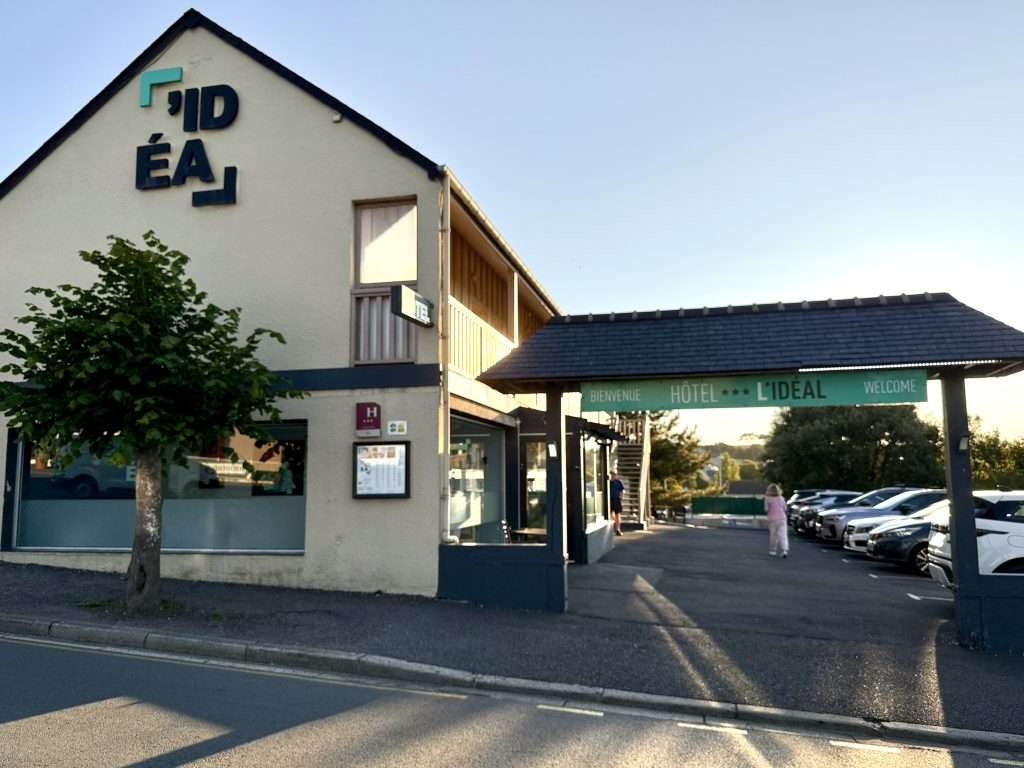
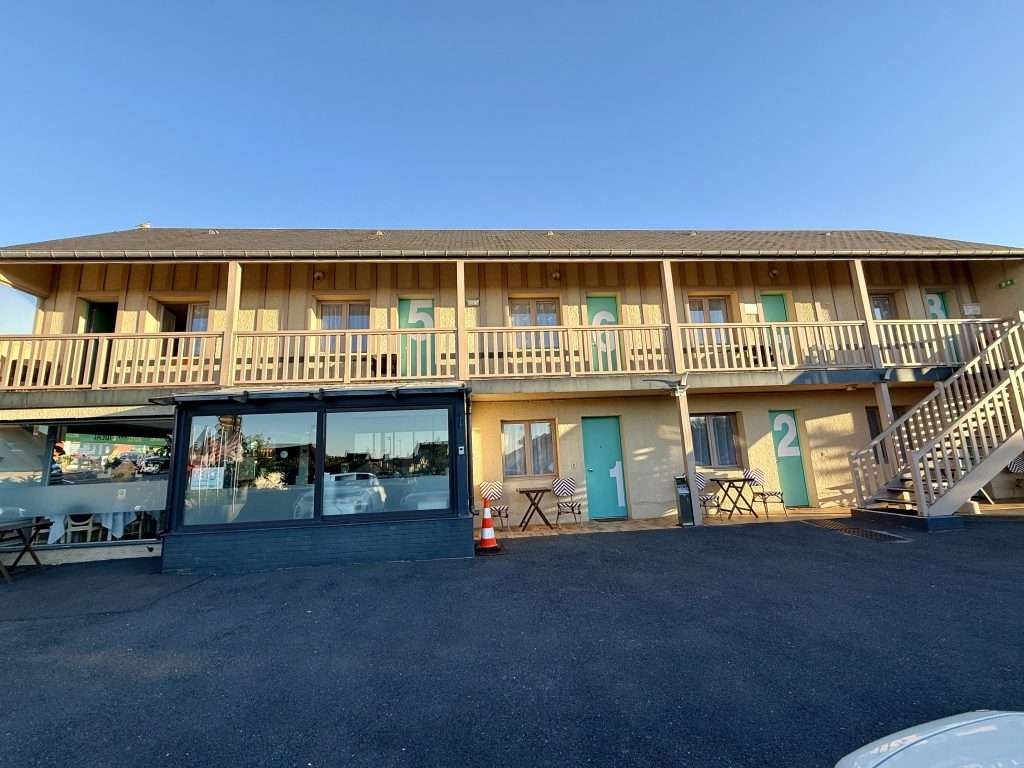
- Overnight at Hôtel l’Ideal le Mountbatten, Arromanches-les-Bains – 8 mins (6.2 kms)
Day 3 - The American Section
- Sainte-Mère Église – 50 mins (65.7 kms)
- Utah Beach (American) – 17 mins (12.6 kms)
- Omaha Beach (American) – 37mins (47.6 kms)
- 360 degree Circular Cinema – Arromanches-les-Bains – 31 mins (31kms)
- Overnight at Hôtel l’Ideal le Mountbatten, Arromanches-les-Bains
Day 4 - Ingenuity, Strategy and Perseverance - The Secret Floating Harbour and Pegasus Bridge
- Arromanches les Bains – D Day Museum (on foot)
- Pegasus Bridge – 43 mins (48.4 kms)
- Honfleur – 51 mins (58.8 kms)
- Overnight – Honfleur
Day 5 - 6 - A Relaxing Finalé in Honfleur
Day 5
- Honfleur – Beach/Gardens
- Overnight – Honfleur
Day 6
- Honfleur to Calais – 2hr 48 mins (276 kms)

The rest of this post gives a little more detail about what there is too discover on a trip to the Normandy Beaches to help whet your appetite for making your own journey. My aim is to point you in the right direction to enjoy making your own discoveries, so the emphasis is on the practicalities rather than any attempt to summarise history. I will leave you to enjoy doing that for yourself after you have made your own trip!
Deep Dive into the Fascinating History of the Normandy Coast
Day 1 - Calais Environs - The Secret Weapons
We used our first day in the environs of Calais to learn more about the groundwork undertaken by Germany for the planned invasion of Britain in World War 2 and the technology behind the V2 Rocket – Germany’s secret weapon which came so close to obliterating Britain.
Le Blockhaus d'Éperlecques
We arrived in Calais after our transit of the Channel Tunnel via Le Shuttle in good time to spend the afternoon exploring Le Blockhaus d’Éperlecques.
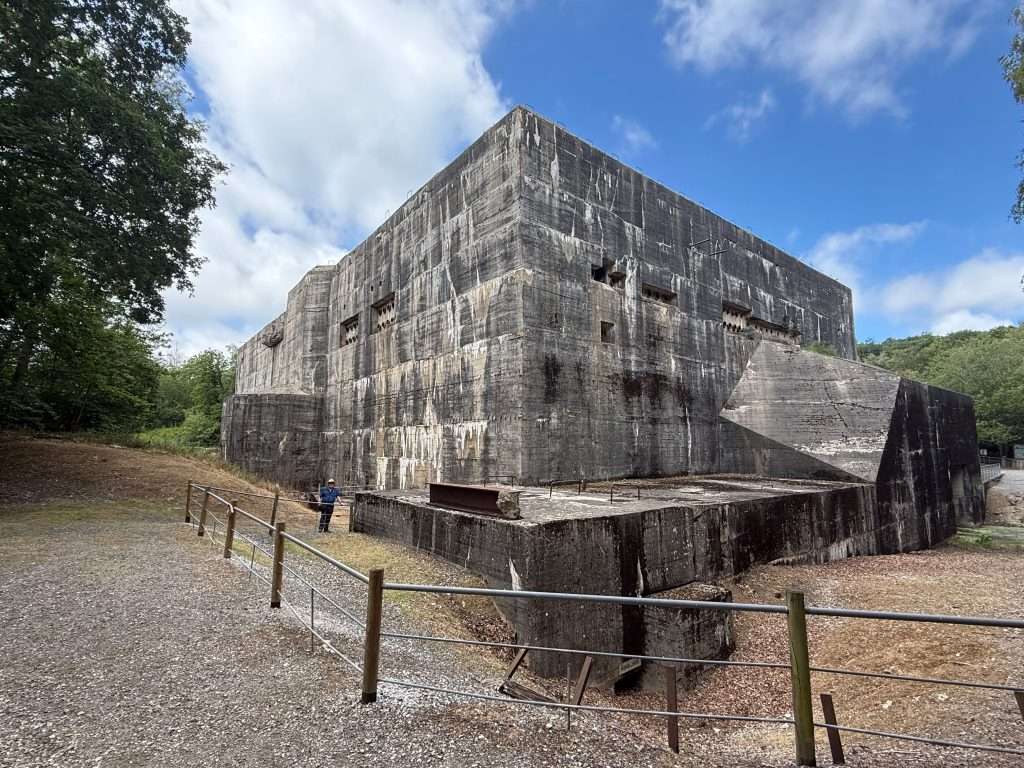
The huge scale of the blockhouse has to be seen to be believed. When you gaze up at the thick concrete walls that dwarf any visitor, it is hard not to be impressed by the scale of this immense construction, forgetting for a moment the chilling purpose for which it was built – to assemble, store, fuel and launch V2 rockets (the secret weapon) at Britain. If the course of WW2 had gone differently, the Nazi regime could have launched up to 36 V2 rockets a day from the Blockhaus.
Let’s get some facts on the table: The V2 rocket was capable of reaching a maximum speed of 5.760 kilometres per hour delivering a 1 ton high explosive warhead. Without any advanced warning, a single missile hitting the ground at supersonic speed could obliterate several buildings leaving massive craters and killing everyone within the immediate blast zone.
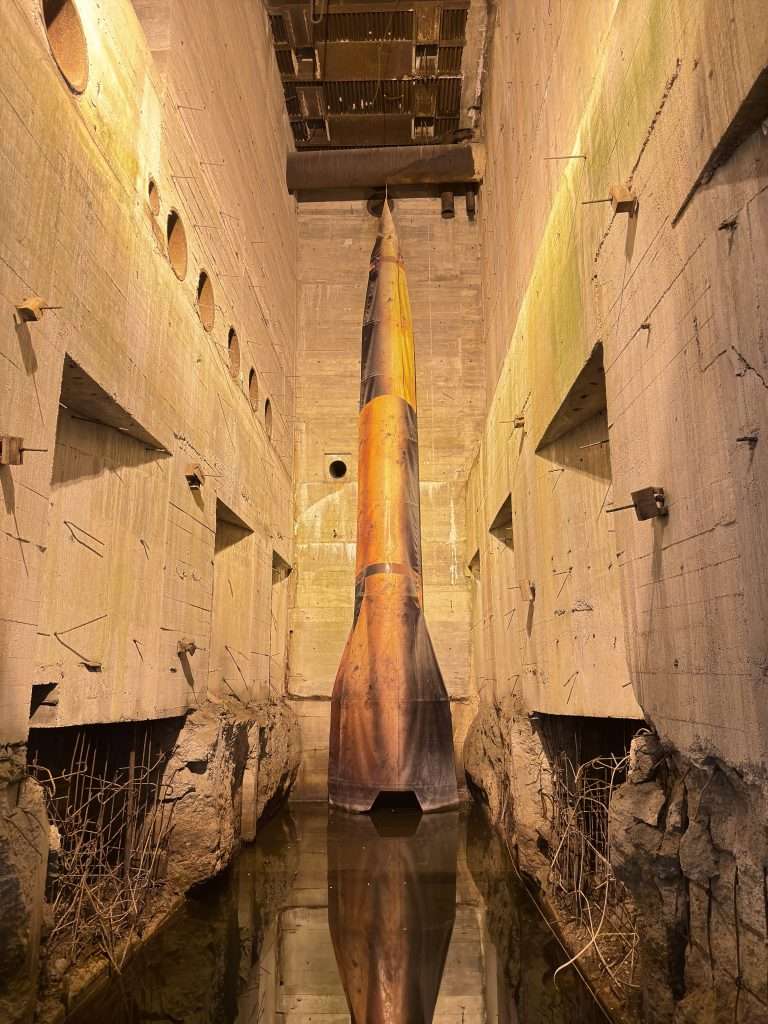
Thankfully – due to meticulous intelligence gathering supported by brave members of the French Resistance on the ground in Nazi occupied France – the Allies were able to mount a successful “bunker busting” bombing campaign that caused heavy damage to the bunker while the concrete was still setting. Despite the huge effort made to build a facility that could withstand attack, heavy Allied bombing thankfully prevented the Blockhaus d’Éperlecques from ever becoming operational. You can still see the bomb craters at the site today.
Apart from the sheer scale of the Blockhaus, the site contains many true stories of the atrocious conditions endured by the thousands of slave labourers and prisoners of war who were forced to build it. Let us always remember them too
Tips for Future Travellers
Pack your sweater for visiting the Blockhaus, even on a hot June day, it is very chilly inside.
Day 2 - The British and Canadian Beaches
Day 2 of the trip is dedicated to an in depth view of Germany’s secret weapon house at La Couple and the British and Canadian D-Day Landing Beaches.
- La Coupole – Centre d’Histoire 24 mins (25.2 kms)
- Sword Beach (British)- 2 hr 48 mins (252 kms)
- Juno Beach (Canadian) – 15 mins (13 kms)
- Gold Beach (British) – 15 mins (11.2 kms)
- Overnight at Hôtel l’Ideal le Mountbatten, Arromanches-les-Bains – 8 mins (6.2 kms)
La Coupole - Museum of History 39-45 - Wizerne
The Blockhaus at Éperleques is a good first introduction to the V2 Rocket Sites, but La Coupole , situated on the D210 road in Rue André Clabaux, 62570 Wizerne takes you on a much deeper and more informative journey through WW2 history. Whether you are passionate about the Second World War, a heritage lover, or simply curious La Coupole offers an immersive and vivid experience that you are unlikely ever to forget.
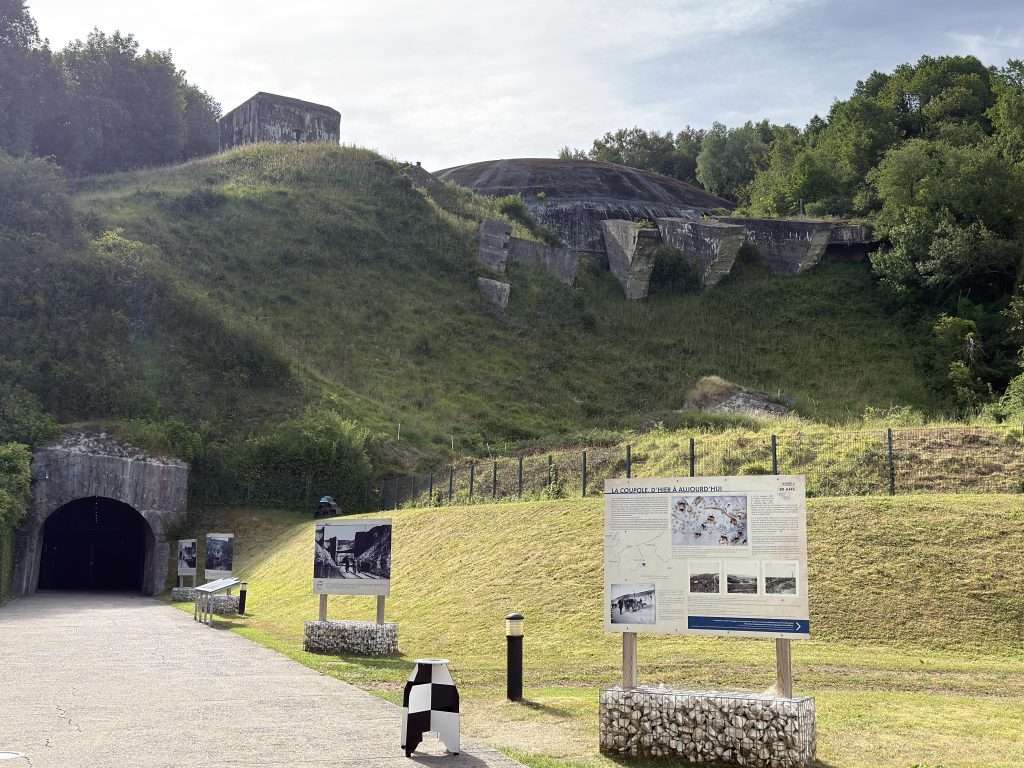
Equipped with interactive iPads – one for each visitor – every step taken through the underground galleries of the former World War II bunker reveals a new discovery. You can also see simulations of what might have happened had events turned out differently. If you are visiting with kids, they will love unlocking the treasure points buried in the underground chambers which help to unravel history before their eyes.
There is also a planetarium at La Coupole. A combined ticket can be purchased if you have the time to see a show. We allowed a full morning for our visit which did not include the Planetarium.

Sword Beach
Juno Beach

Gold Beach
Gold Beach was the code name for the central of the five D-Day landing beaches located between Port-en-Bessin on the west and the Lieu-dit La Rivière in Ver-sur-Mer on the east. Taking Gold was the responsibility of the British. Their objectives were to secure a beachhead, move west to capture Arromanches, establish contact with the American forces at Omaha, capture Bayeux and the small port at Port-en-Bessin, and to link up with the Canadian forces at Juno to the east. Remnants of the floating Mulberry Harbour and bunkers can still be seen at Gold Beach today.

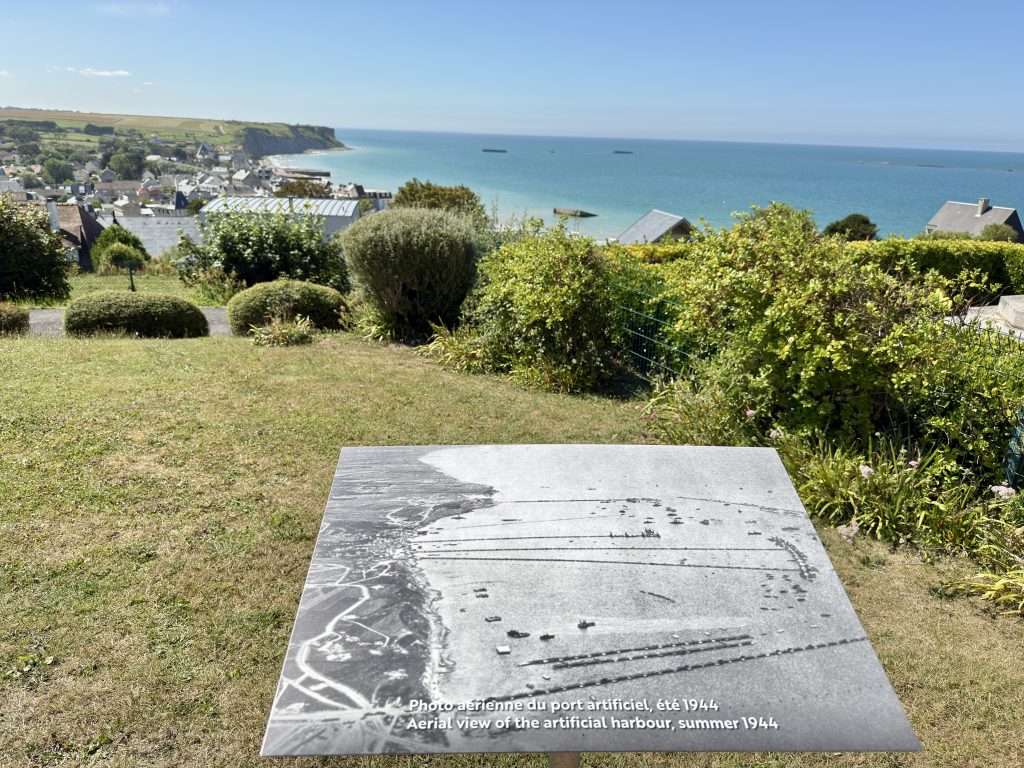
Arromanchese-les-Bains
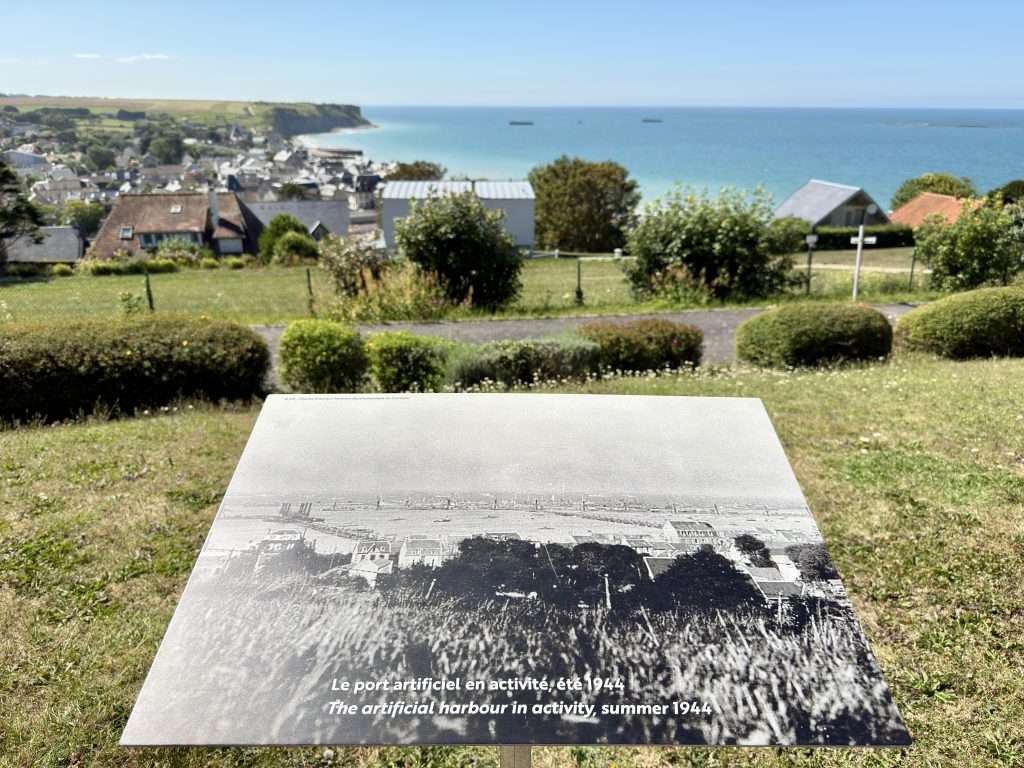
Arromanches-les-Bains is a pretty little seaside resort in Normandy – much like it was back before WW2. In 1944, the atmosphere in this little town was very different with rationing and curfews imposed by the Nazi occupying forces.
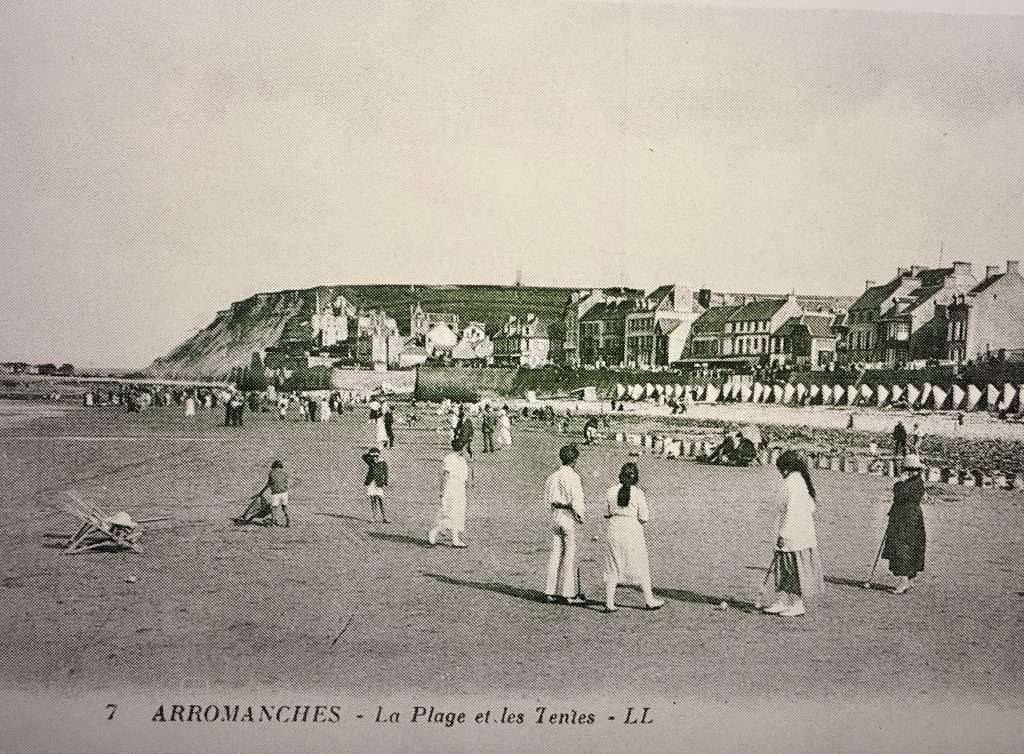
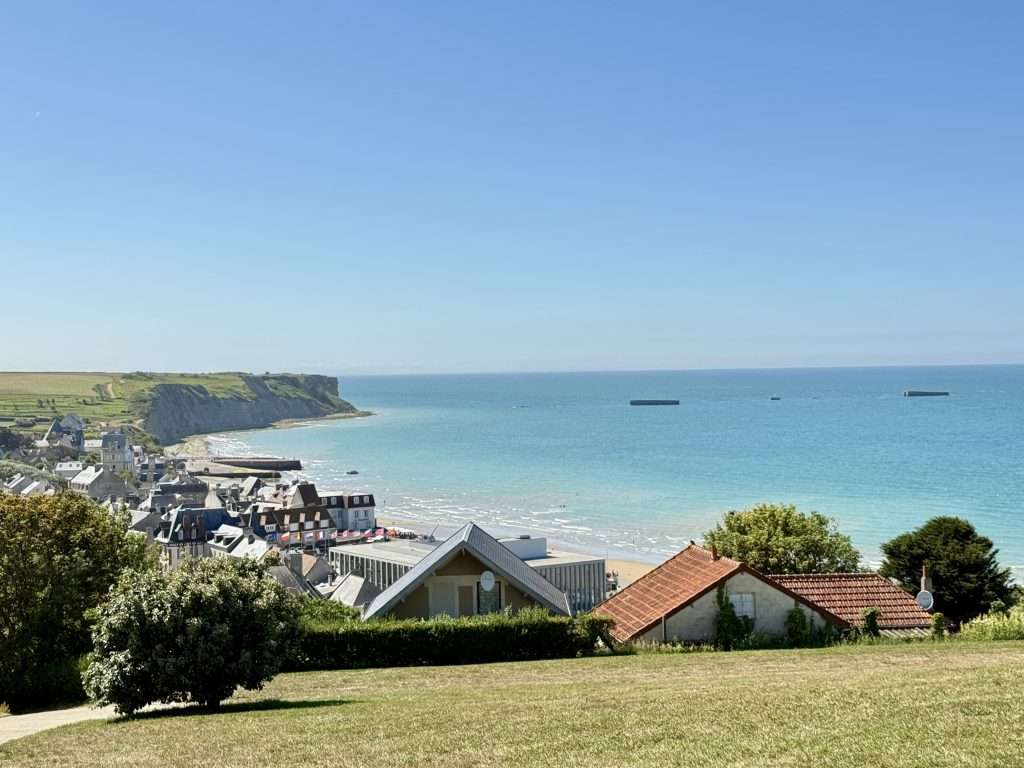
Arromanches-les-Bains - Pitstops
Les Bains d'Éte
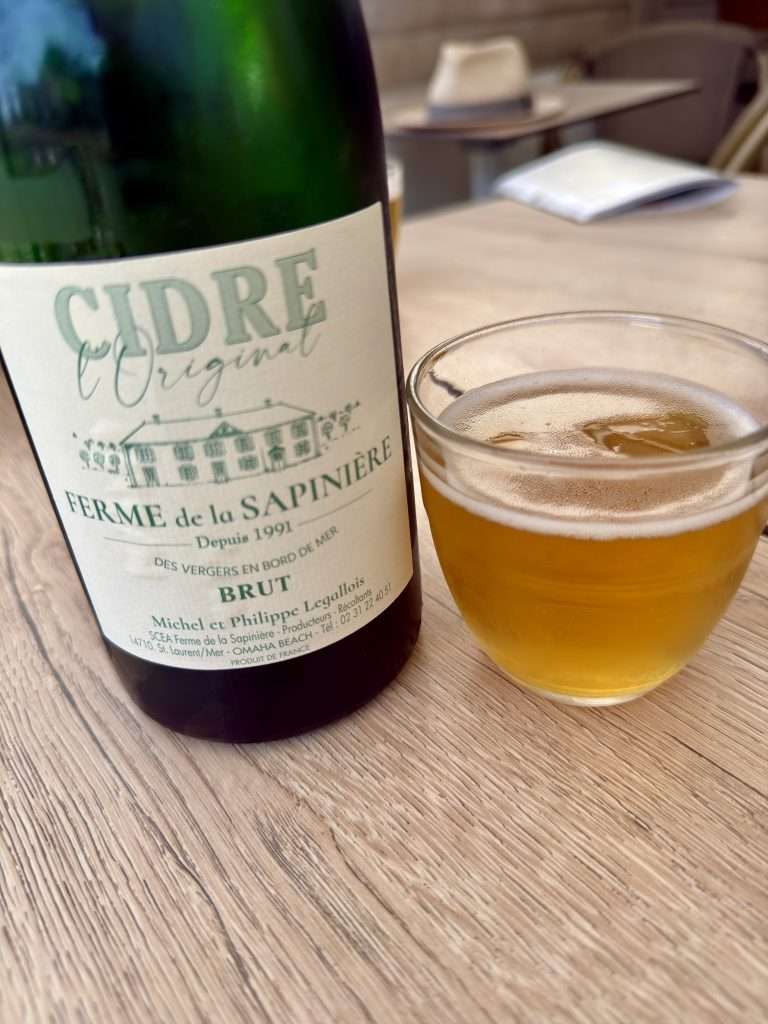
Located right on the beachfront overlooking the remains of the Mulberry Harbour, Les Bains d’Éte is a lovely little bar which we chose for aperitifs on both of the nights we stayed in Arromanches. They have a local, delightfully crisp, dry cider there – served by the glass or the bottle. We also tried a Cidre Royale – a cocktail of cider and cassis (blackcurrant liqueur). The traditional kir vin blanc (white wine) or kir royale (champagne) is my preference, but it was good to sample one of the local specialties.
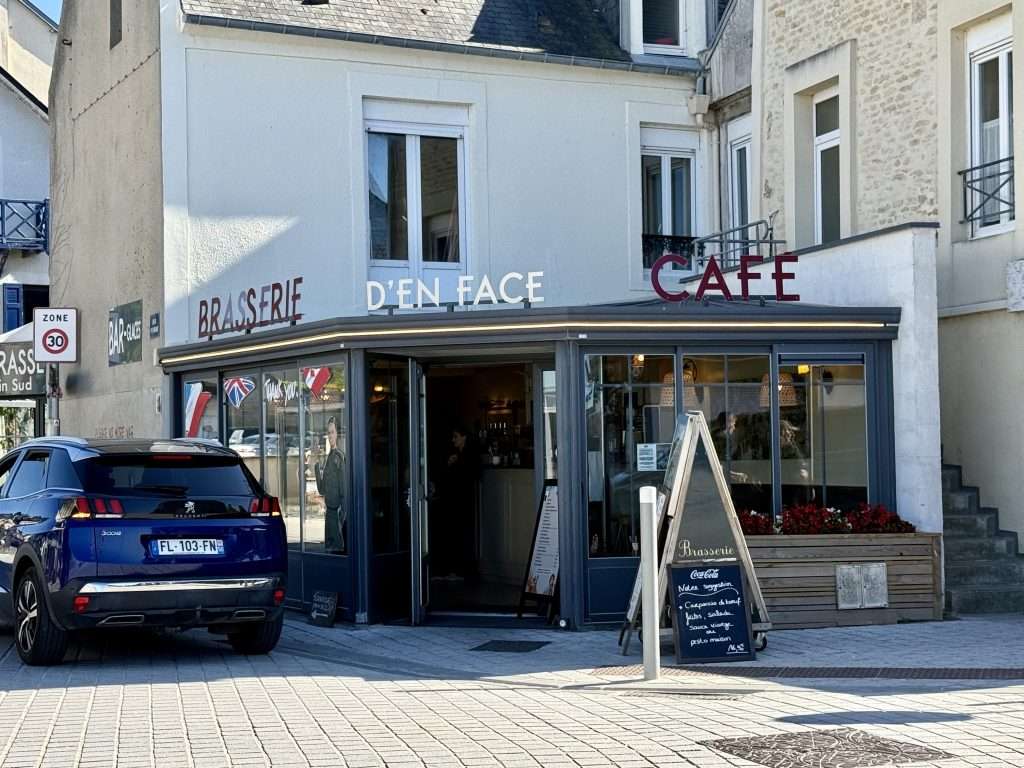
Brasserie d'En Face
Our choice for dinner on our first night in Arromanches was Brasserie d’En Face a short walk down Arromanches-les-Bains‘ main street. They have a lovely large garden area for open air dining at the back and a menu full of normandy specialties. Normandy cuisine features apples, cider, cream and seafood and you can find them all at Brasserie d’en Face. Their specialties include creamy mussels (moules à la crème), Trou Normand (a shot of calvados – apple brandy) and Tarte Normande (French apple flan). The local soft cheeses are also all delightful. (Telephone for reservations: 02 31 51 98 44)

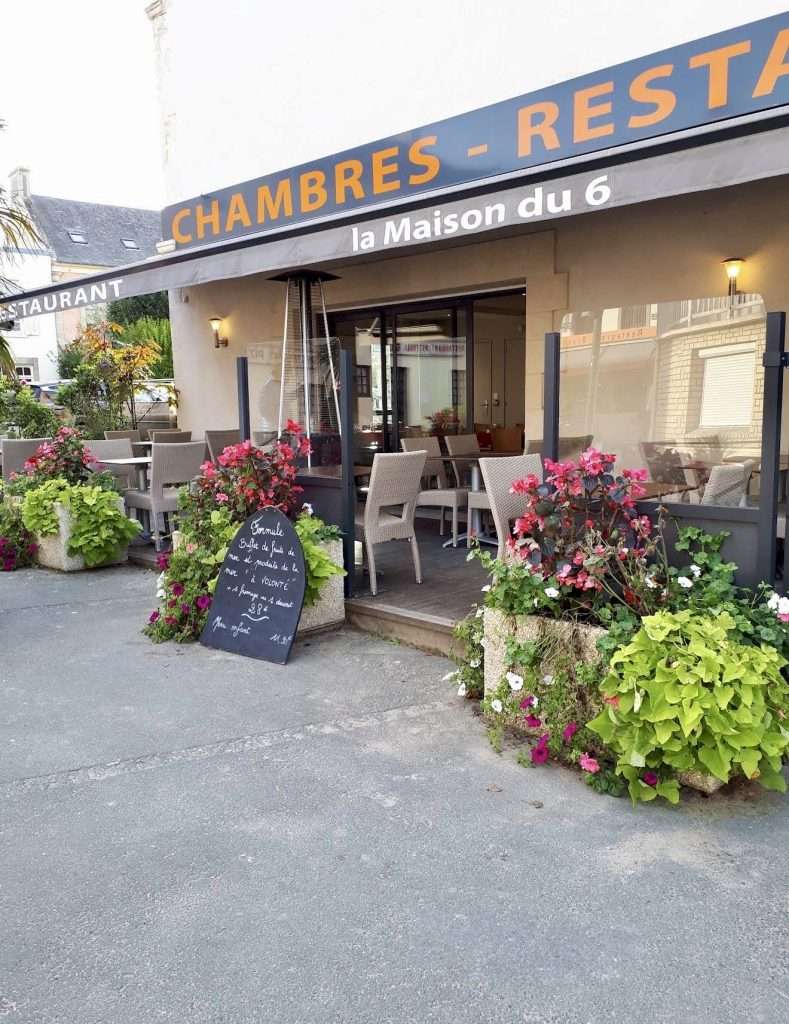
La Maison du 6
La Maison du 6 – a hotel and a restaurant – was our choice for our second night in Arromanches. I preferred the menu at Brasserie d’en Face, but there wasn’t too much to choose between them really – both take a pride in serving local Normandy specialties.
Day 3 - The American Section
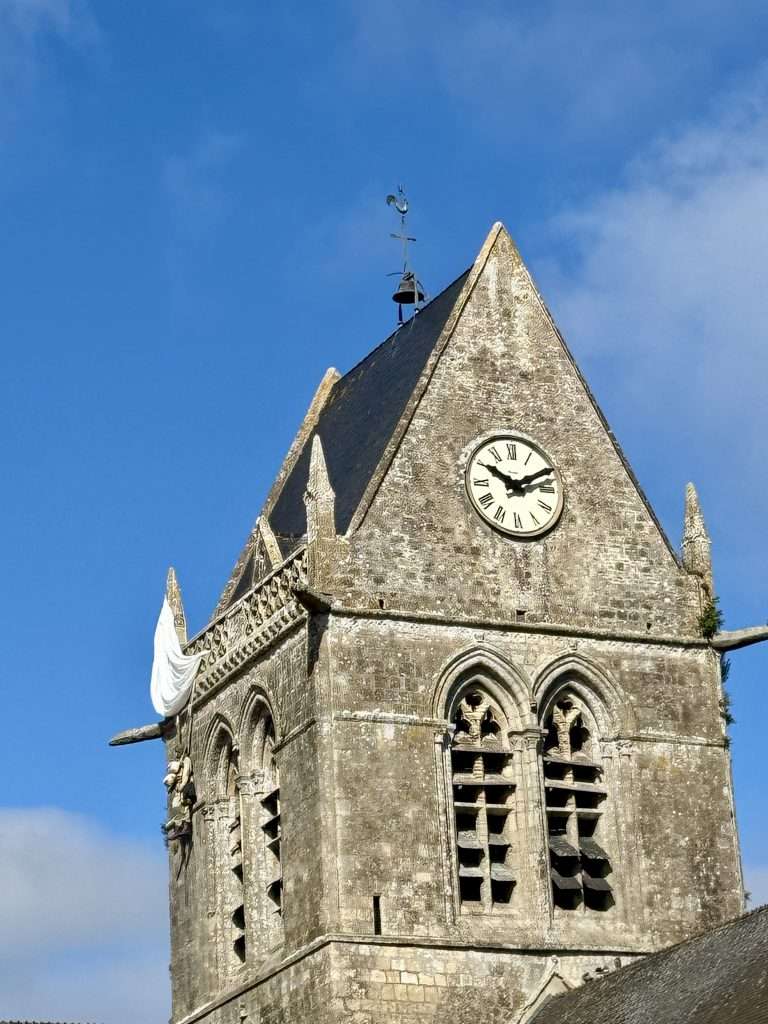
Day 3 focuses on the American sector of Utah and Omaha beaches and the little town of Saint-Mère Église – the first French village to be liberated. The extensive Airborne Museum at Saint Mère Église is definitely well worth devoting 2 – 2.5 hours to to get the best of it. We also wanted to leave enough time to catch a screening at the 360 degree circular cinema on our return to Arromanches in the late afternoon. There is just so much to see in this area, it is hard to find time to fit it all in – even with almost a week to play with. To be honest, there is a degree of overlap between the various museums though, so it makes sense to decide on your area of focus and narrow down your chosen sights based on that. We obviously had a natural leaning towards the British Museums and so spent less time at Utah and Omaha Beaches than others might choose to do.
- Sainte-Mère Église – 50 mins (65.7 kms)
- Utah Beach (American) – 17 mins (12.6 kms)
- Omaha Beach (American) – 37mins (47.6 kms)
- 360 degree Circular Cinema – Arromanches-les-Bains – 31 mins (31kms)
- Overnight at Hôtel l’Ideal le Mountbatten, Arromanches-les-Bains
Sainte-Mère Église
- C-47 Building: Housing a C-47 transport aircraft used in the D-Day drops, surrounded by authentic paratrooper gear and equipment.
- Operation Neptune Building: Which puts you right into the shoes of a paratrooper with immersive multimedia displays to recreate the night time parachute drop over Normandy.
- WACO Building: Housing an original, full-sized Waco CG-4A glider – the fragile aircraft used to transport troops and equipment.
- Occupation Building: Detaiing, detailing the reality of French civilian life under the Nazi occupation of Normandy.
Do look out for the amusing booklets in the souvenir shop designed to help American troops to fit into both French and British society whilst preparing for D-Day. These little booklets gave us quite a few chuckles as they summed up the essence of British and French mannerisms and customs. They would probably still be useful for travellers today in some ways?
Reading Recommendations
The souvenir shop also contains many books about WW2. If you are interested in reading further, here are a few titles to add to your wishlist:
- A Woman of No Importance – The Untold Story of Virginia Hall – WW2’s Most Dangerous Spy – by Sonia Purnell
- The Pianist: The Extraordinary True Story of One Man’s Survival in Warsaw, 1939-1945 – by Władysław Szpilman
- All the Light we Cannot See – the story of a blind French girl whose path crosses with a German soldier in the final days of WW2. – a Pulitzer Prize-winning bestseller by Anthony Doerr
- Suite Française – Set during the year that France fell to the Nazis – by Irène Némirovsky
- Millions Like Us – Women’s Lives in War and Peace 1939-1949 – by Virginia Nicholson
- D-Day – The Battle for Normandy – by Antony Beevor
All the Light We Cannot See is now also a series available on Netflix. There is also a movie version of The Pianist.
An unmissable movie which brings the battle for Normandy to life in an unforgettable way and features many of the locations included in this post is The Longest Day. You can rent or buy this 1962 classic war film in the UK on digital platforms like: Amazon Prime, Apple TV and Sky Store.

Sainte-Mère-Église Pitstop
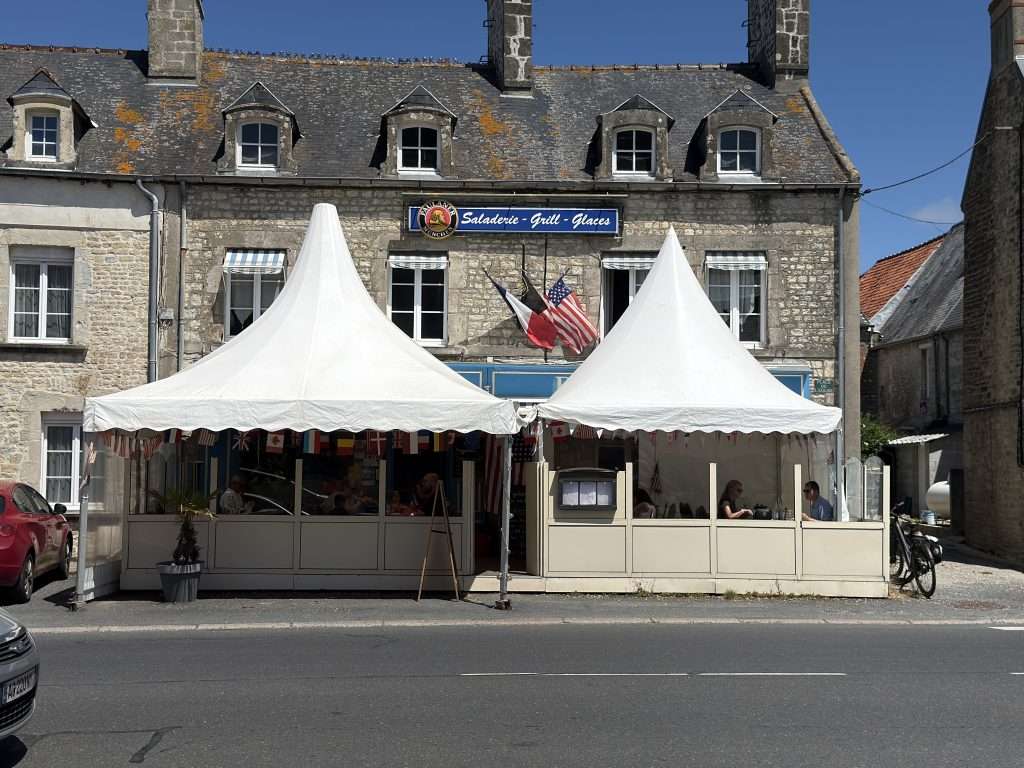
For some light relief after absorbing the excellent displays at the Airborne Museum, I can highly recommend the Crêperie Montoise in Sainte-Marie du Mont for a traditional Normandy lunch. Choose from a wide selection of galettes (savoury) and crêpes (sweet), accompanied by a bowl of cider.
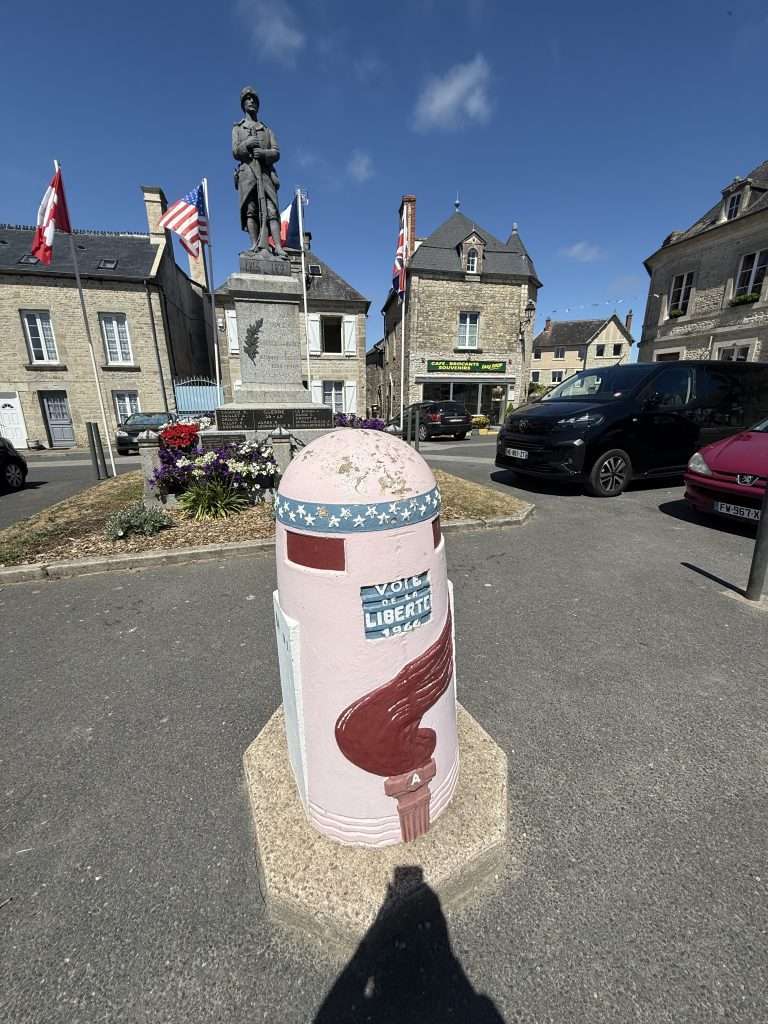
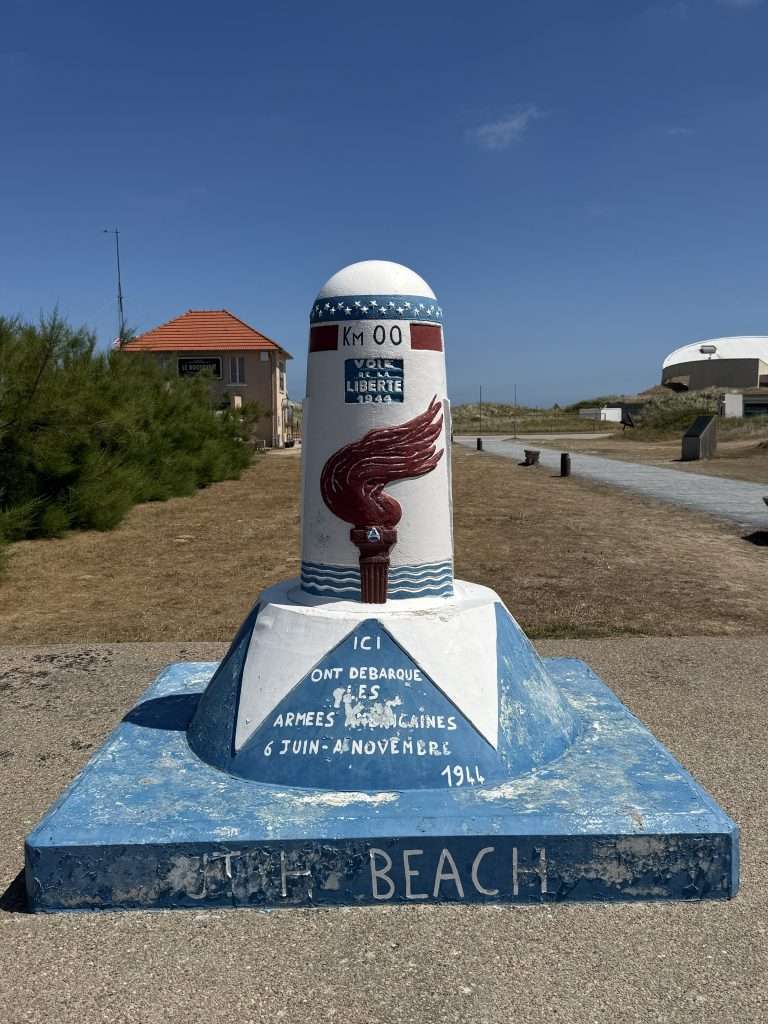
Utah Beach
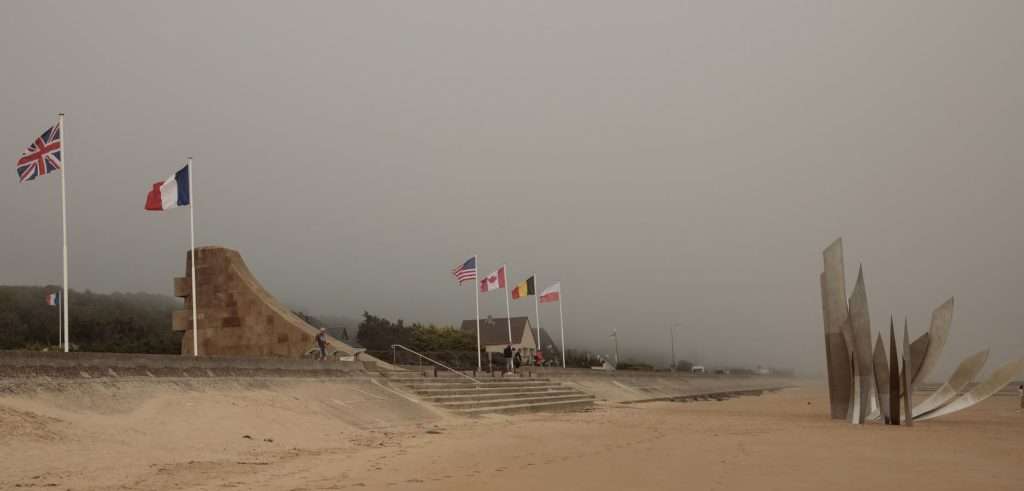
Omaha Beach
Arromanches 360 Circular Cinema
Part of the reason for spending a shorter time at Omaha and Utah beaches than we might have liked was to allow sufficient time to catch a screening at the 360 Degree Circular Cinema at Arromanches-les-Bains. An amazing collection of original images from British, Canadian, German, American and French archives have been collated to tell the tale of the 100 days of the Battle of Normandy. Projected onto 9 screens, the walls that surround you immerse you into the realities of the battle for 20 minutes. The footage is screened every 20 – 30 minutes. Check the website for times. Be warned – it is a long, steep walk up to the cinema from town as it is situated on the top of a hill – but it is well worth the ask. As well as the cinema to enjoy, the views from the top are awesome.
Day 4 - Ingenuity, Strategy and Perseverance - The Secret Floating Harbour and Pegasus Bridge
The D-Day Museum at Arromanches-les-Bains is one of the largest of the many museums along the Normandy Coast. We made the most of our Arromanches hotel base to enable us to visit it at opening time on the 4th day of our trip. The visit took the whole morning. We then made our way to our last stop of the trip – Honfleur – taking the route via the Pegasus Bridge.
- Arromanches les Bains – D Day Museum (on foot)
- Pegasus Bridge – 43 mins (48.4 kms)
- Honfleur – 51 mins (58.8 kms)
- Overnight – Honfleur
Must Do - The D-Day Museum - Arromanches-les-Bains
The newly constructed (2023) D-Day Museum at Arromanches-les-Bains replaces the original museum I remember visiting on a trip to France some 40 years ago. It is a great addition to the suite of museums along the Normandy coastline and is definitely a “Must Do” site.
The success of Operation Overlord depended on the ability of the Allied armies to get men, supplies and equipment to Normandy quickly. The rapid capture of a deep-water port was a first requisite, but existing ports were far too heavily defended to successfully capture. Instead, the hugely ambitious concept of building a harbour that could be floated across the English Channel to create an artificial harbour capable of accommodating large vessels and unload troops, tanks, equipment and supplies to Normandy was born. The D-Day Museum uses intricate models and real life stories to bring the history of Mulberry B harbour – the remains of which still litter the beach and float poignantly in the sea beneath the Museum at Arromanches today.
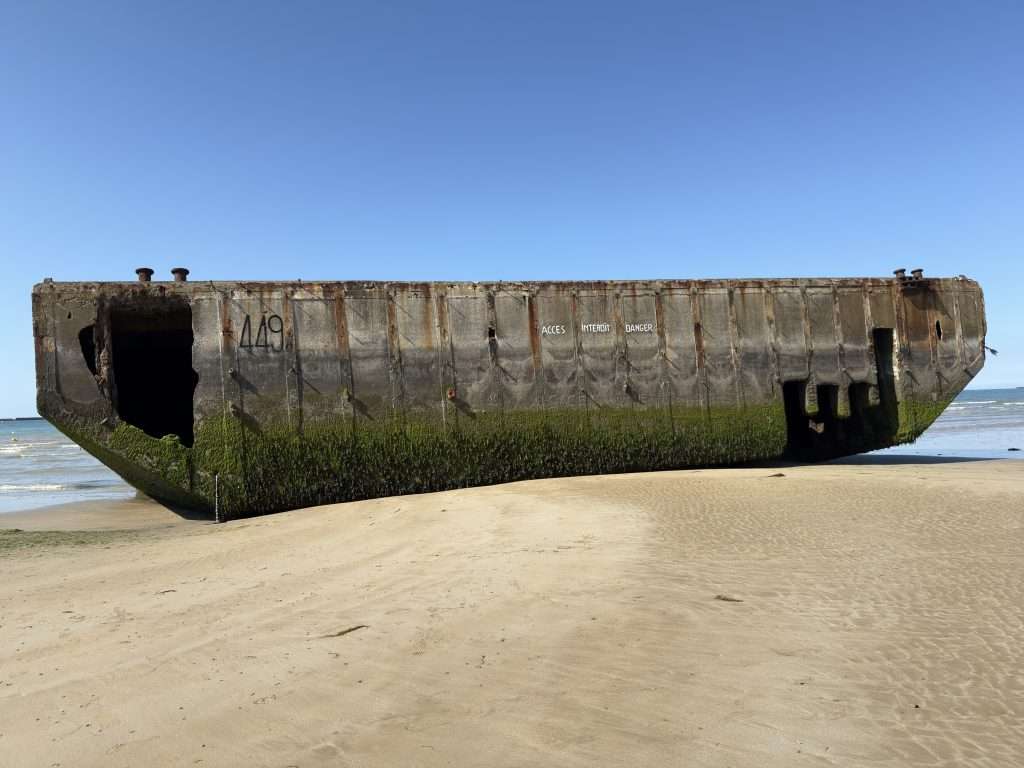
The museum does a fantastic job of explaining how all the elements of the harbour were individually constructed in secret in Britain for later assembly in Normandy – rather like a giant meccano set. The testing of the concept in the wild waters of the Scottish coast is also fascinating to learn about.
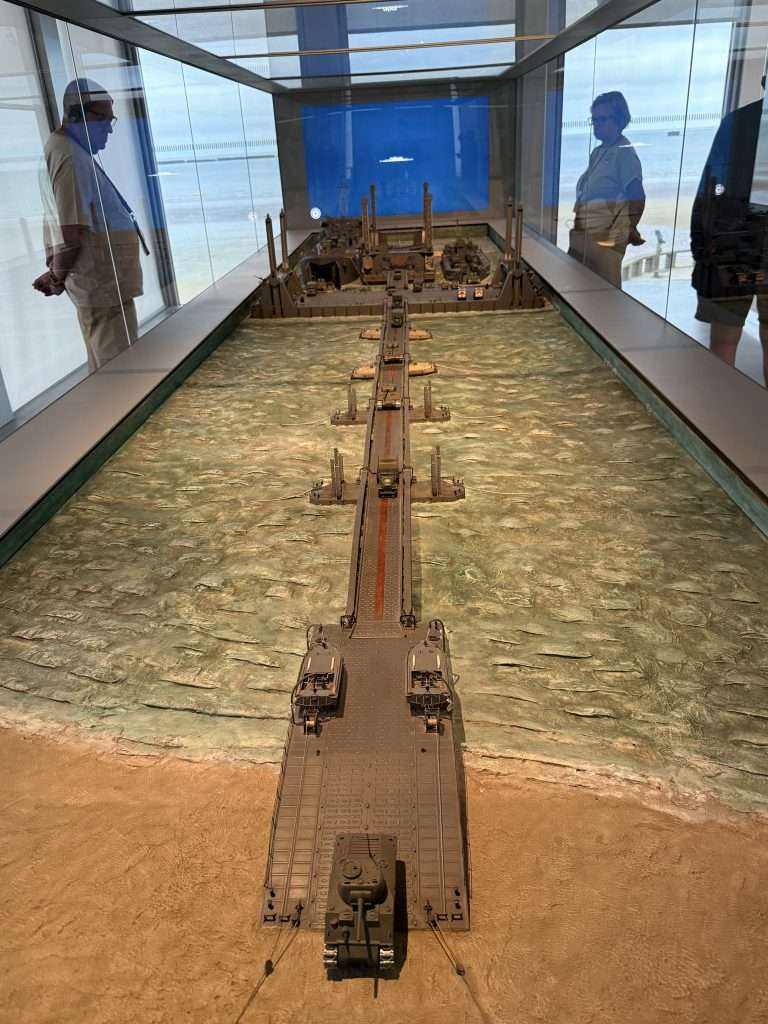
Fascinating Facts
There were in fact 2 harbours – Mulberry A (American) and Mulberry B (British). Mulberry A was assembled by the Americans at Omaha Beach shortly after the D-Day landings. Severe weather and shortcuts made in the anchoring process led to the destruction of the harbour within just 2 weeks. Just imagine the consequences if the same fate had befallen Mulberry B?
Pegasus Bridge
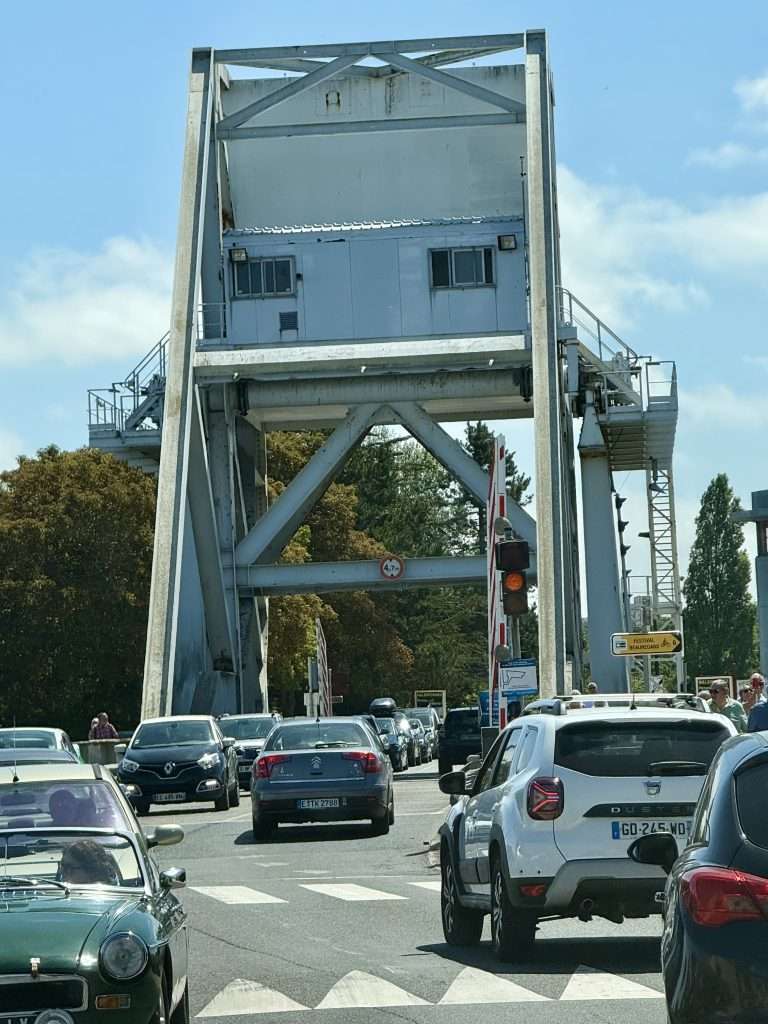
The museum at Pegasus Bridge was unfortunately not open at the time of our visit.
Day 5 - 6 - A Relaxing Finale in Honfleur
We arrived at the charming French town of Honfleur in good time for lunch and there was certainly no shortage of restaurants to choose from. We were lucky to have fabulous light in the Estuary – maybe just the quality the Impressionist painters admired when they first discovered the charming Vieux Bassin (Old Harbour).
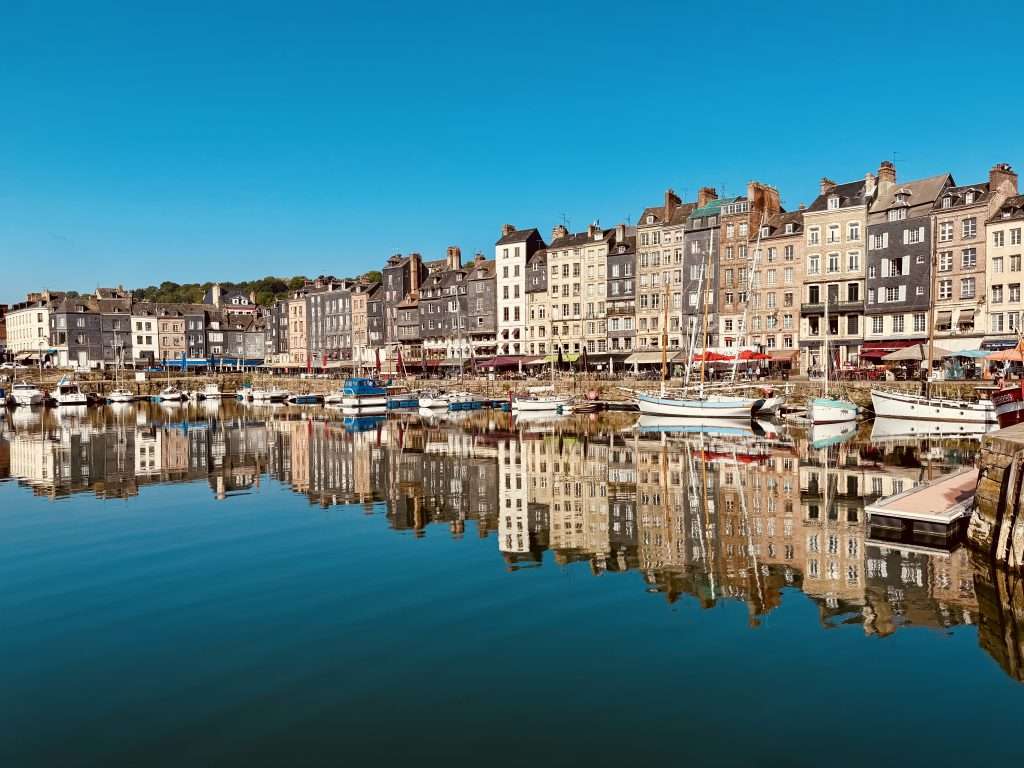
It is such a blessing that Honfleur was spared the ravages of both World Wars and that so many medieval half-timbered houses still crowd side by side along its narrow cobbled backstreets and the picturesque harbour. You can easily forget the emotional weight of war and enjoy a twirl on the old carousel and a stroll around the ancient wooden structure of St. Catherine’s Church (1468).
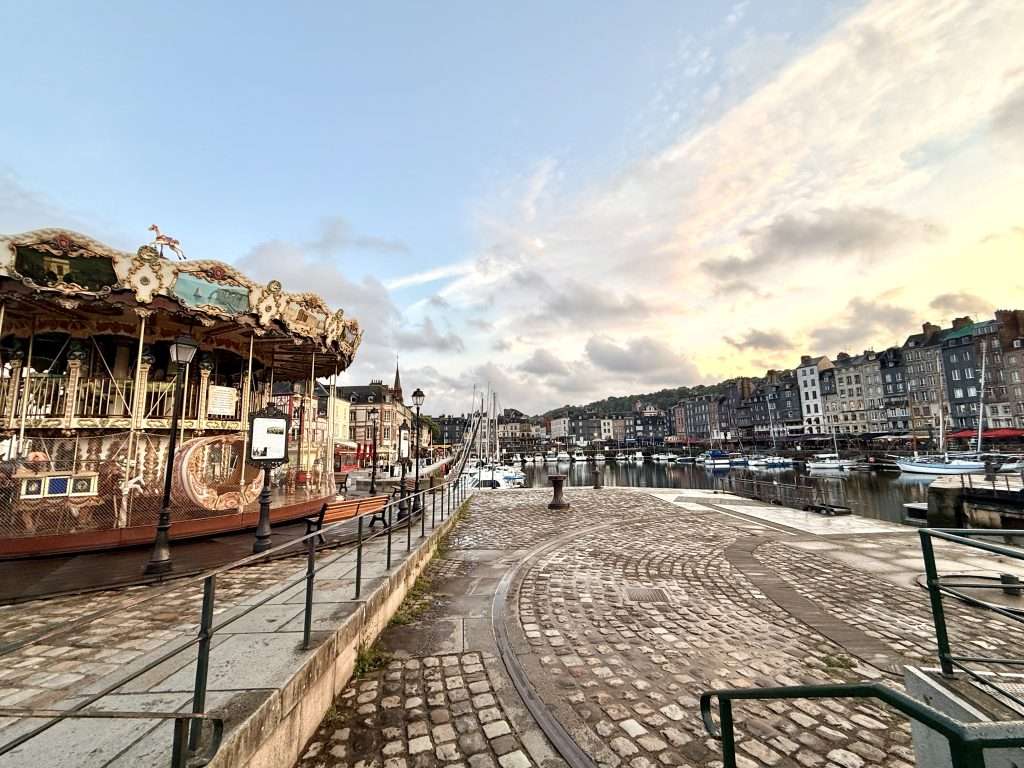
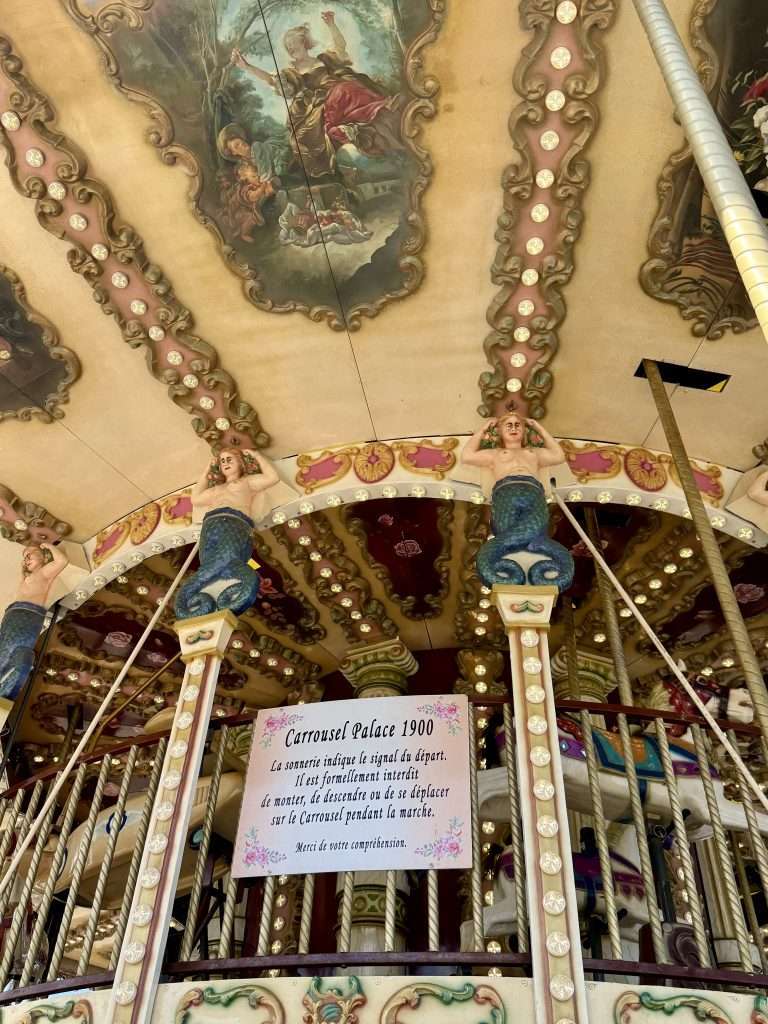
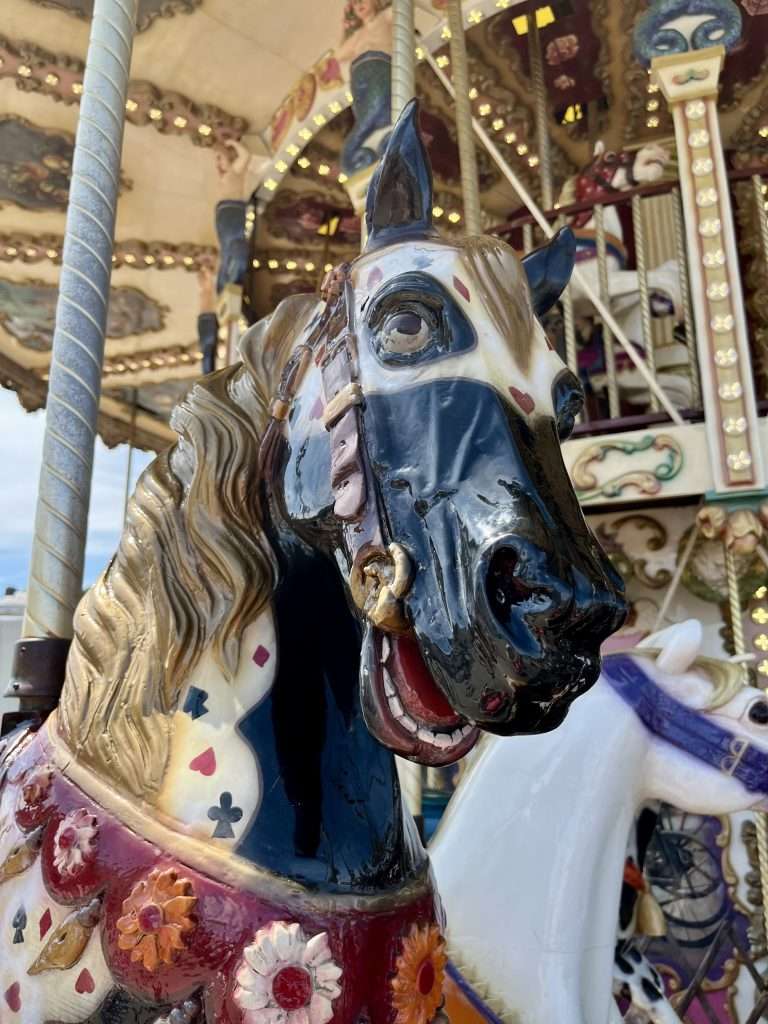

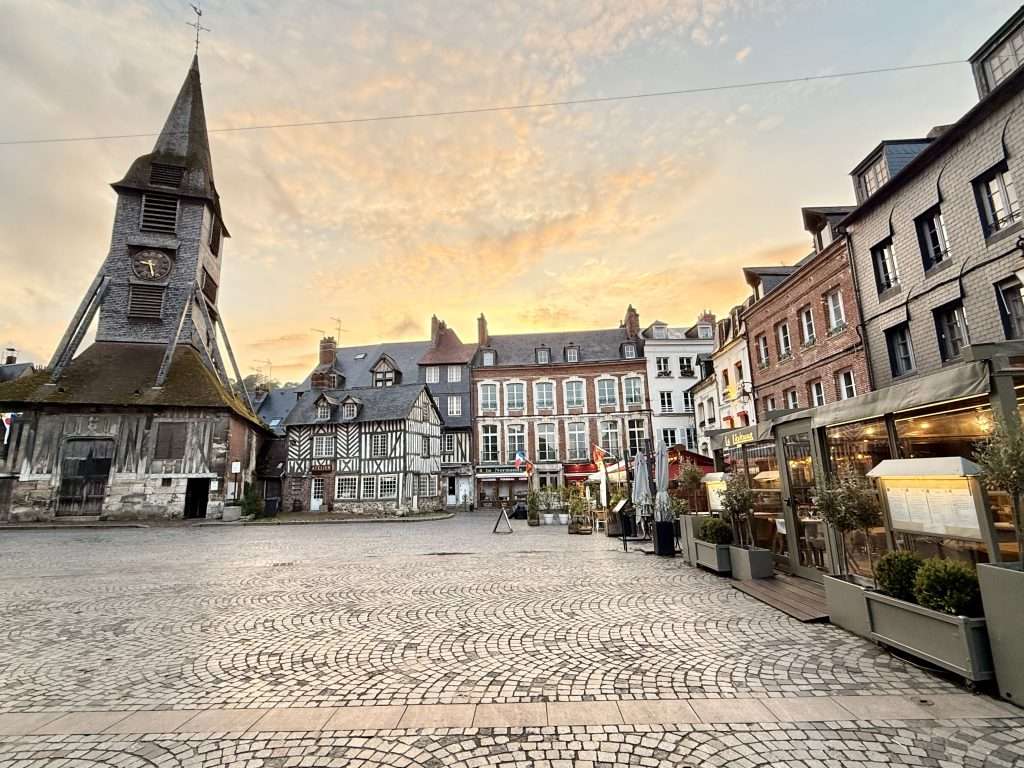
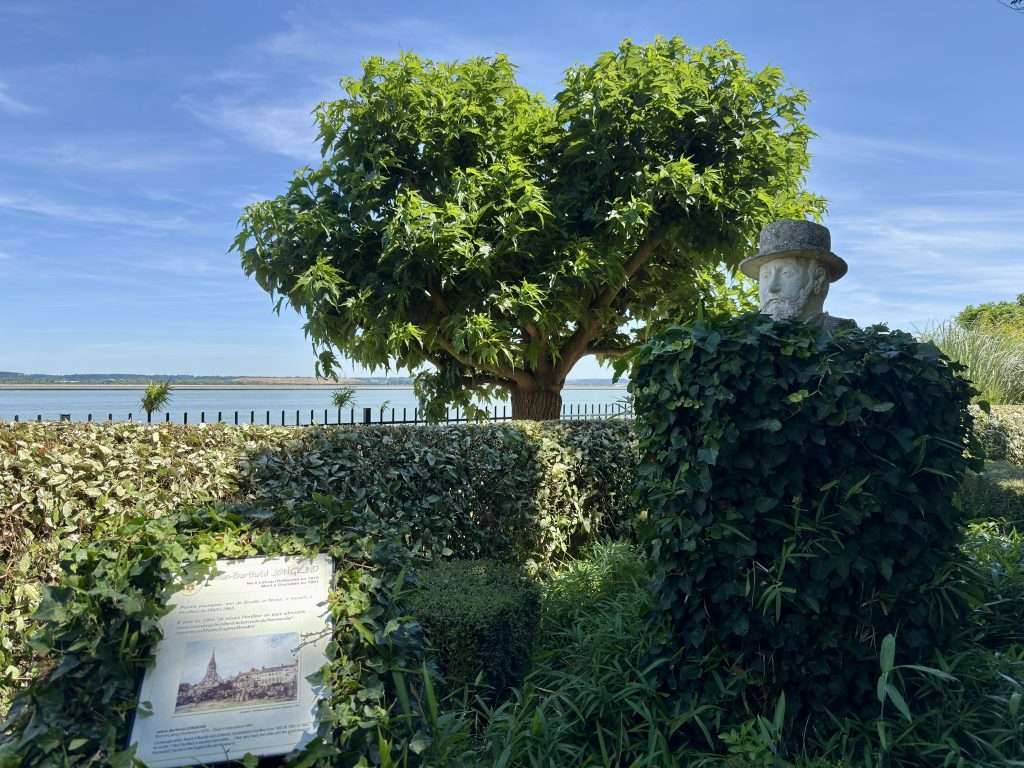
As well as the plethora of individual little shops, ice cream bars, cafés, bars and restaurants, Honfleur also has a large public strolling garden located at the edge of the town which can be visited for free. Just next to that lies the peaceful10 hectare Jardin des Personalités (Garden of the Personalities). Hidden in hedged enclosures stand busts of actors, artists and many other characters from Honfleur’s rich historical and cultural heritage. A lily pond (complete with a Monet style bridge), rose beds and tree lined lawns complete the gardens and offer some welcome shade on a hot day. It is a lovely place to take a picnic, so maybe bring along your baguette, a little Camembert and a bottle of wine/local cider?
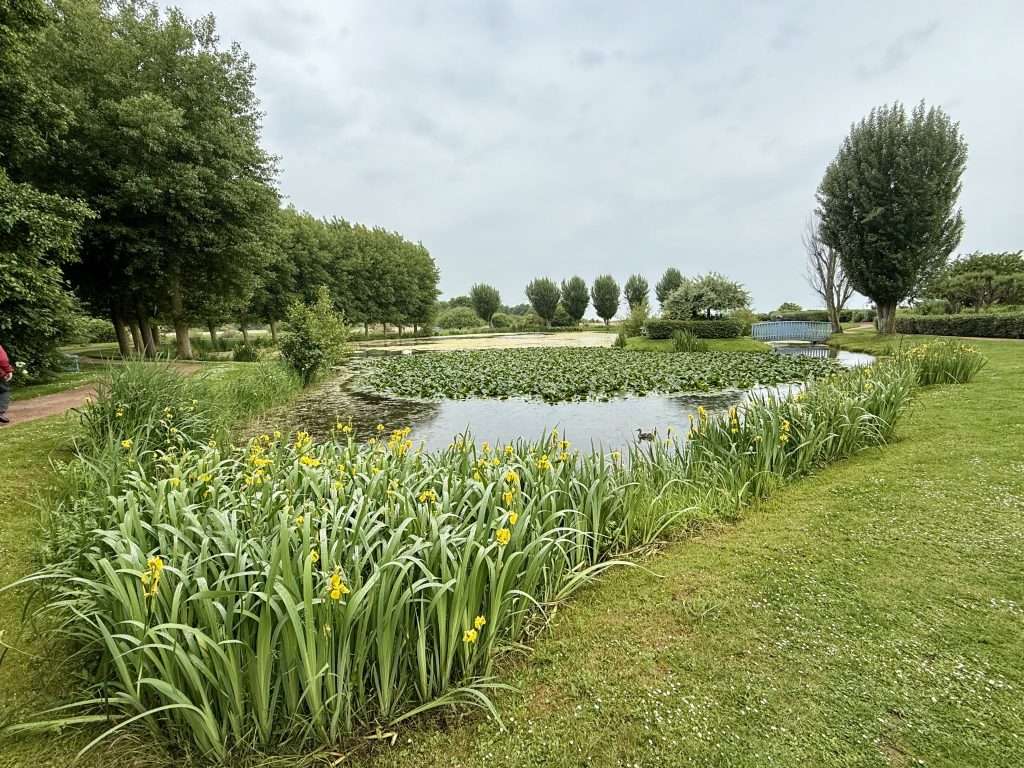
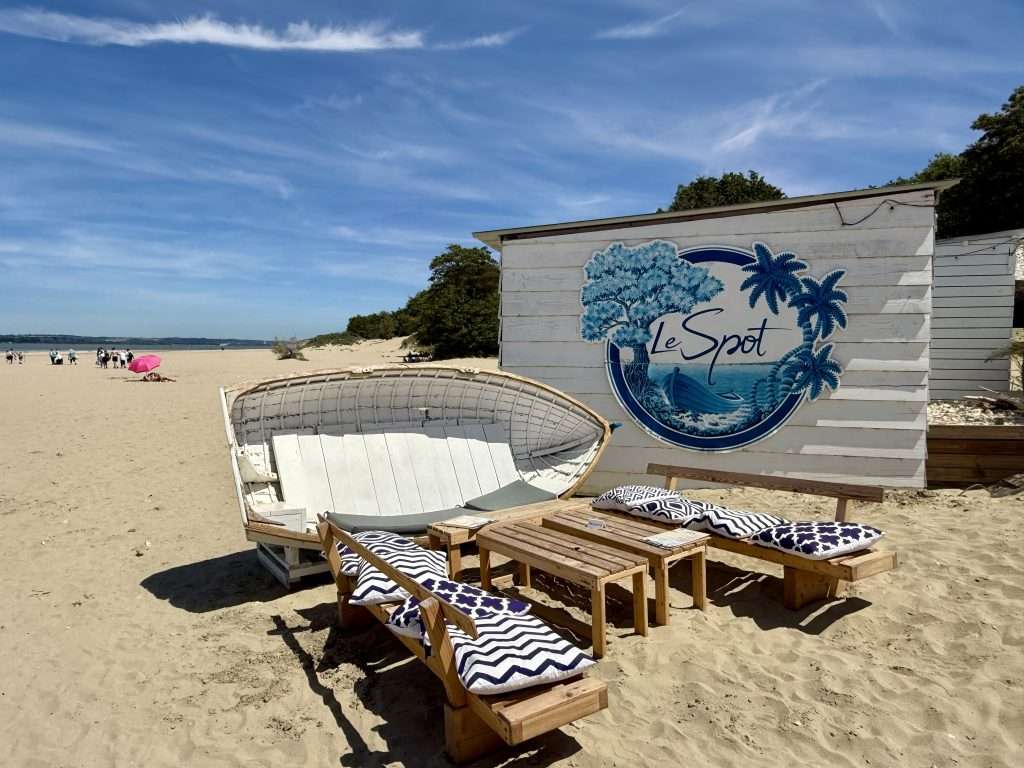
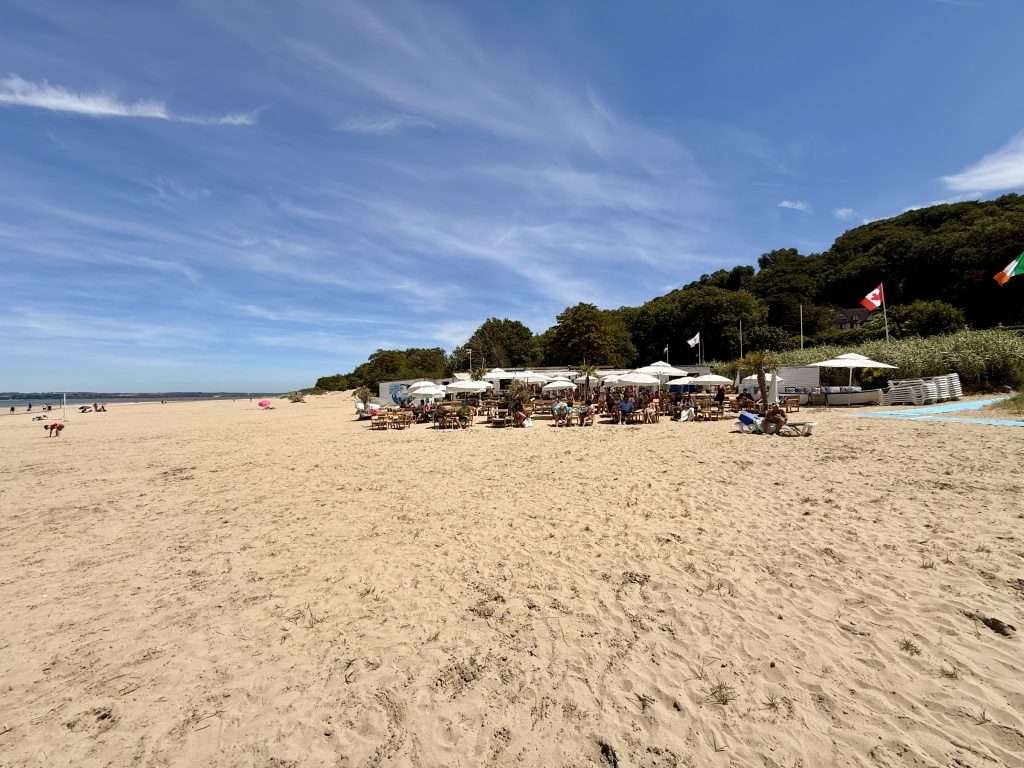
There is an exit from the gardens which leads to Honfleur’s seaside spot. The Plage du Butin (Butin Beach) is a family friendly sandy beach with free parking, showers, a playground and toilet facilities. In season, it also has a beach restaurant – “Le Spot” which makes the perfect place for lunch (if you forgot to bring your garden picnic?!)
Honfleur Pitstops
Apart from “Le Spot” on La Plage du Butin, Honfleur has a couple of other places I can recommend.
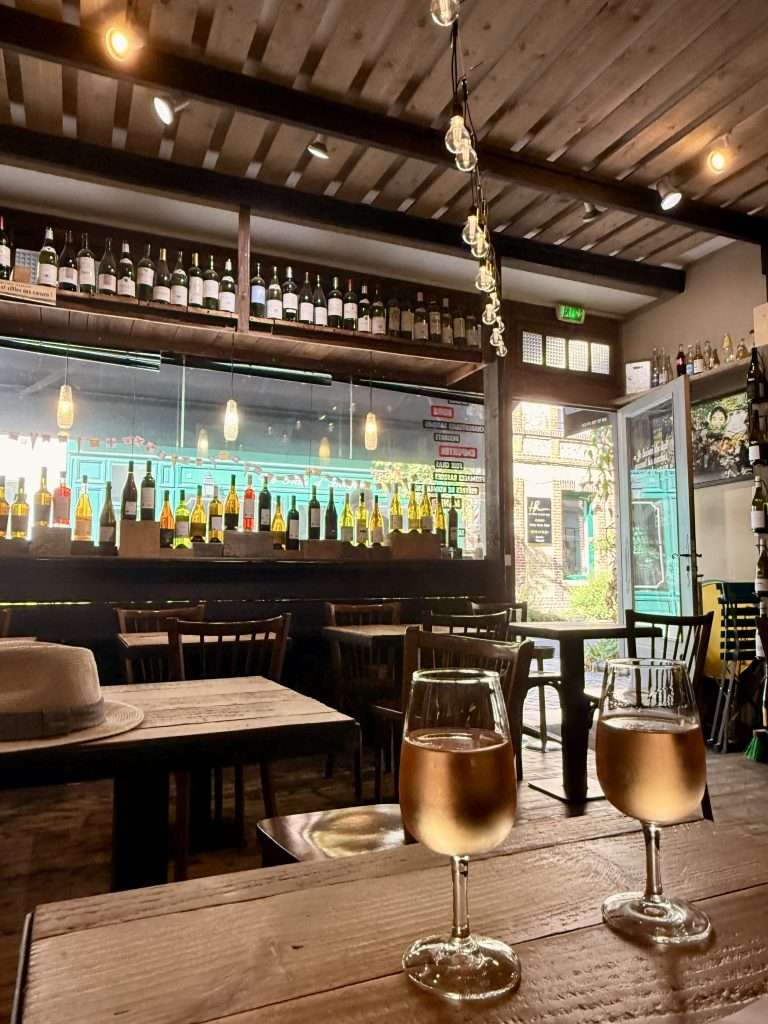
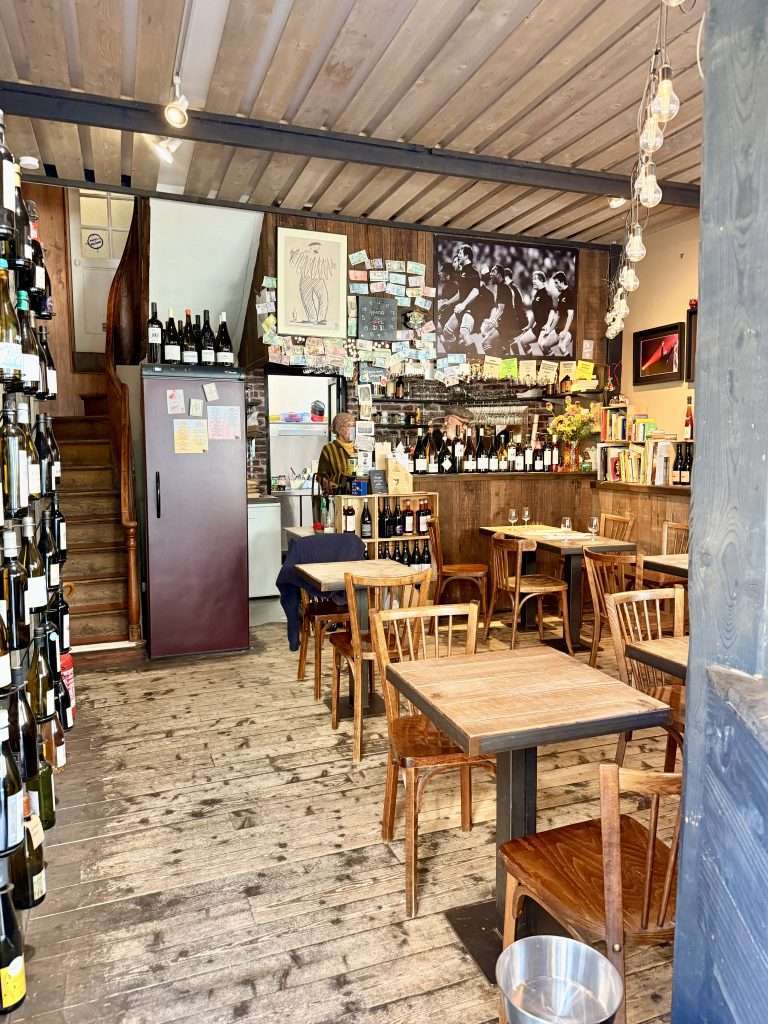
If you are looking for a quintessentially French wine bar, you cannot go wrong with Chez D.D., located at 28 Rue Cachin just 5 minutes walk or so from the Old Harbour. You can take your pick from an extensive collection of bottles of wine that line his walls or buy wine by the glass. Tempting tapas style nibbles are also available if you are peckish.
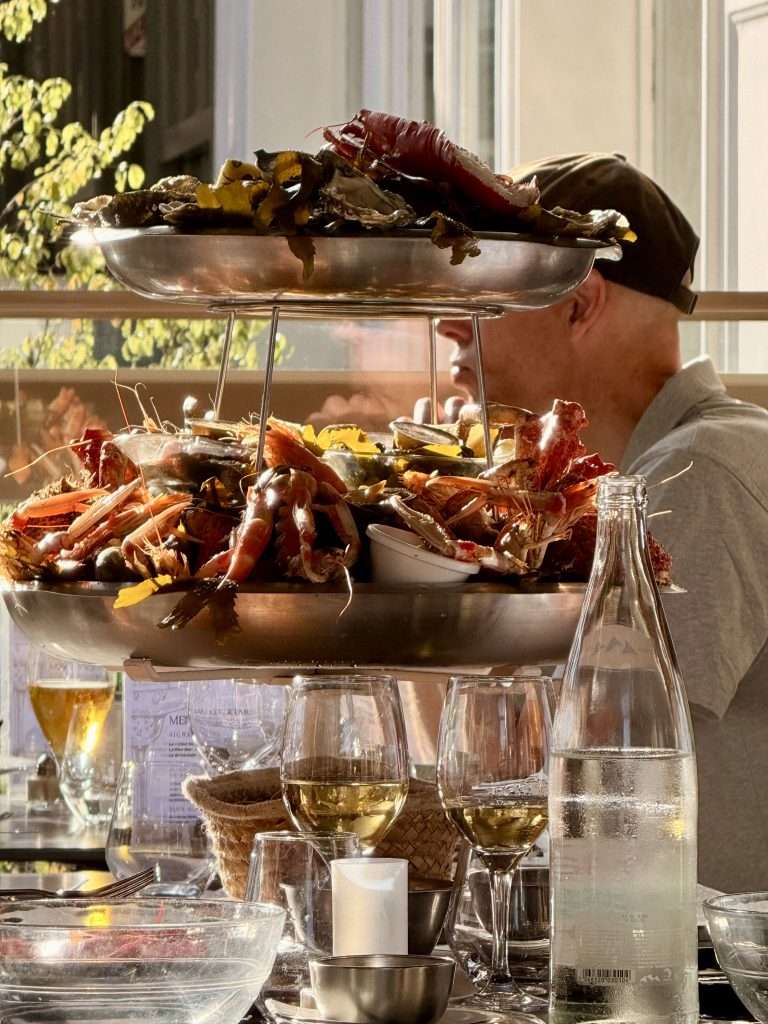
Seafood is available on many of the menus in Honfleur. I don’t eat it myself, but Côté Resto in the centre the town has an impressive menu and all its tables were full of French people enjoying huge platters of seafood on both occasions when I visited, so that might be a good choice if you are looking for fresh oysters/lobster etc.
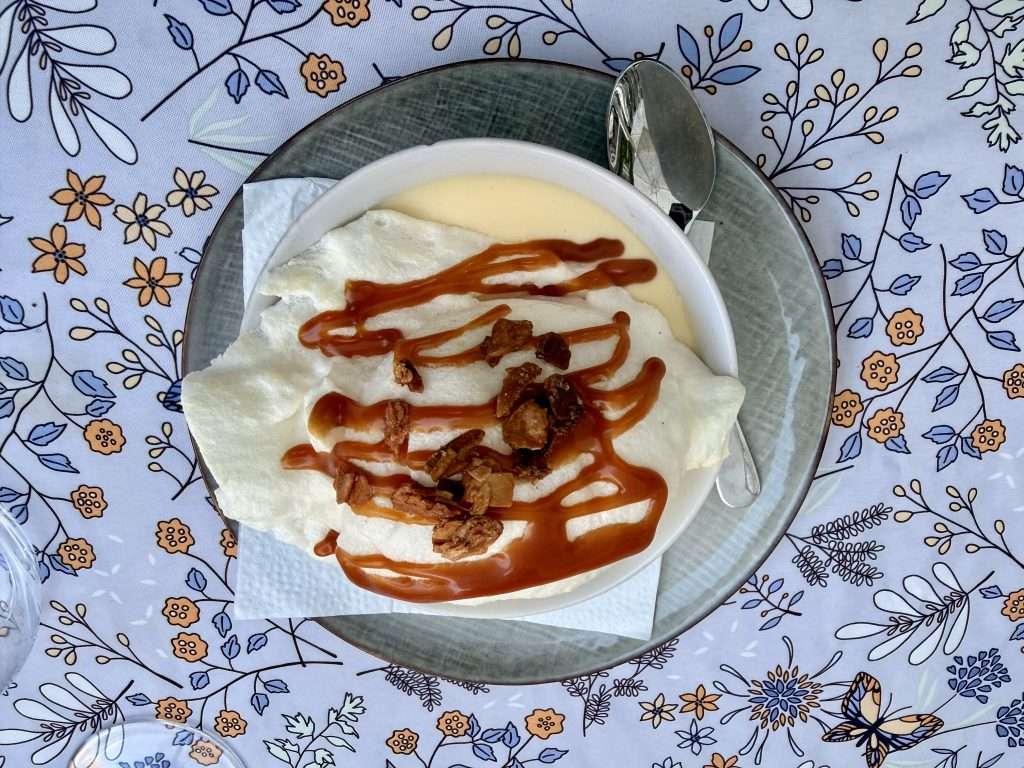
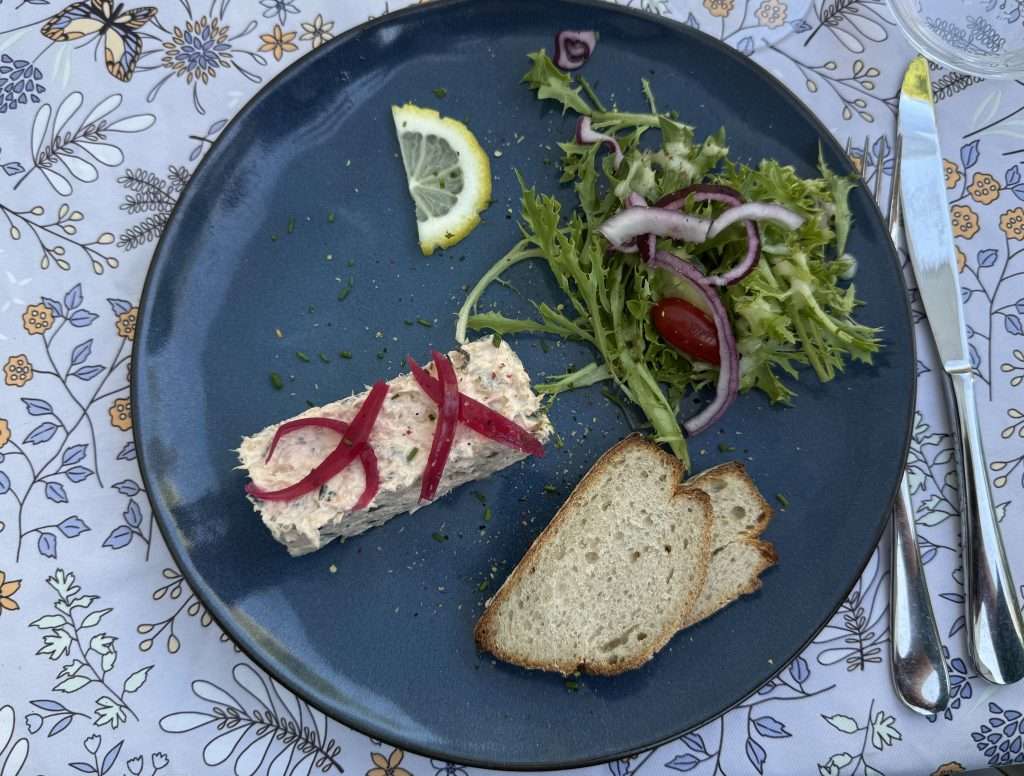
If you don’t mind a steep uphill walk out of town for 25 minutes or so, then I can also recommend the restaurant at the hotel where we stayed in Honfleur – the Logis Hotel Ferme de la Grande Cour. Their specialities are Ìles flottantes (meringues floating on vanilla custard with a caramel drizzle) and salmon rillettes (a delicate salmon paté made with cream cheese).
Where We Stayed - Accommodation Reviews
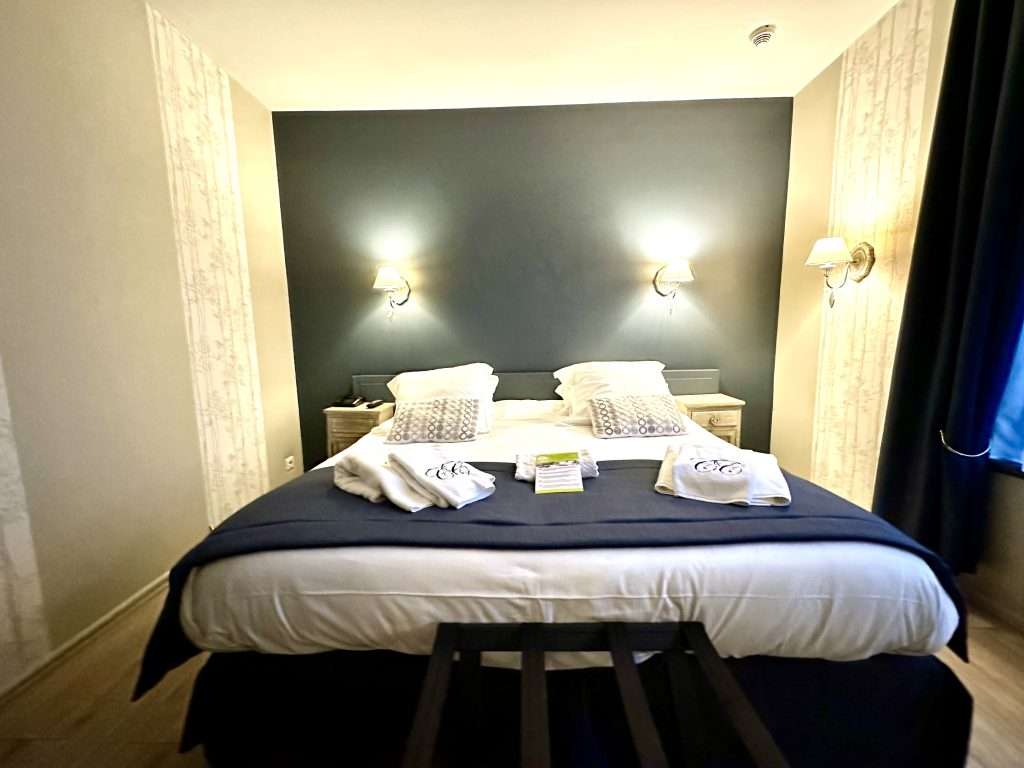
We chose 4 bases for our 6 day trip. Here are the hotels we used and an honest review to help you plan your own trip.
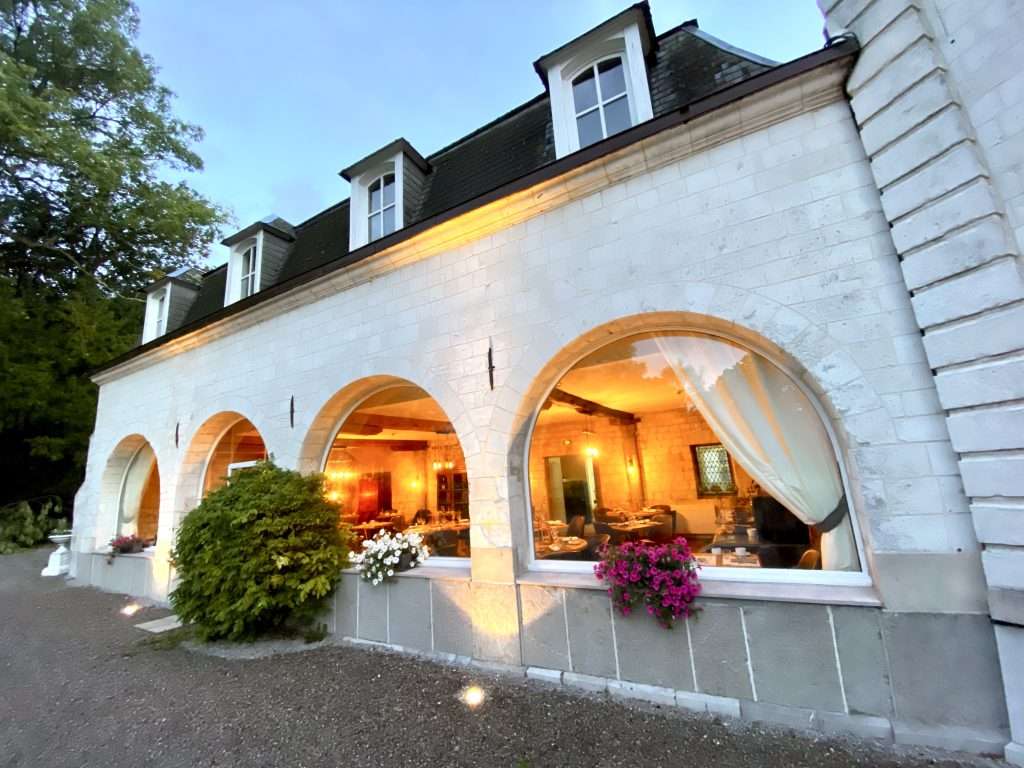
Calais Environs - Chateau de Cocove


Arromanches-les-Bains - Hôtel l'Idéal de Mountabatten
Honfleur - Logis Hotel Ferme de la Grande Cour
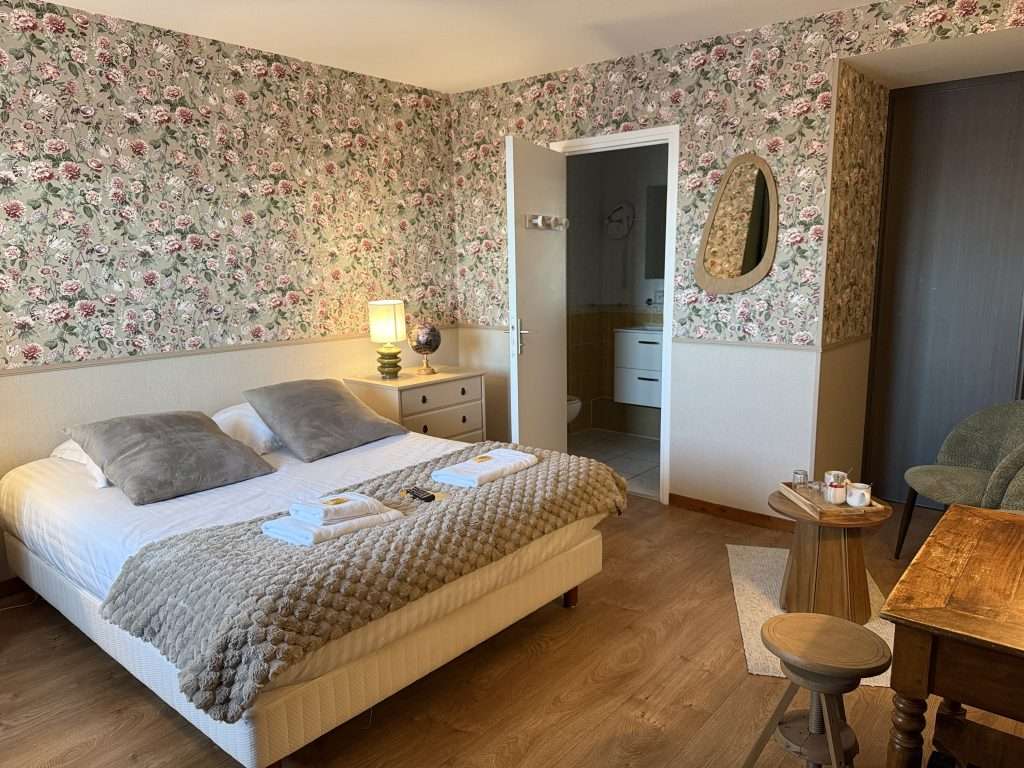
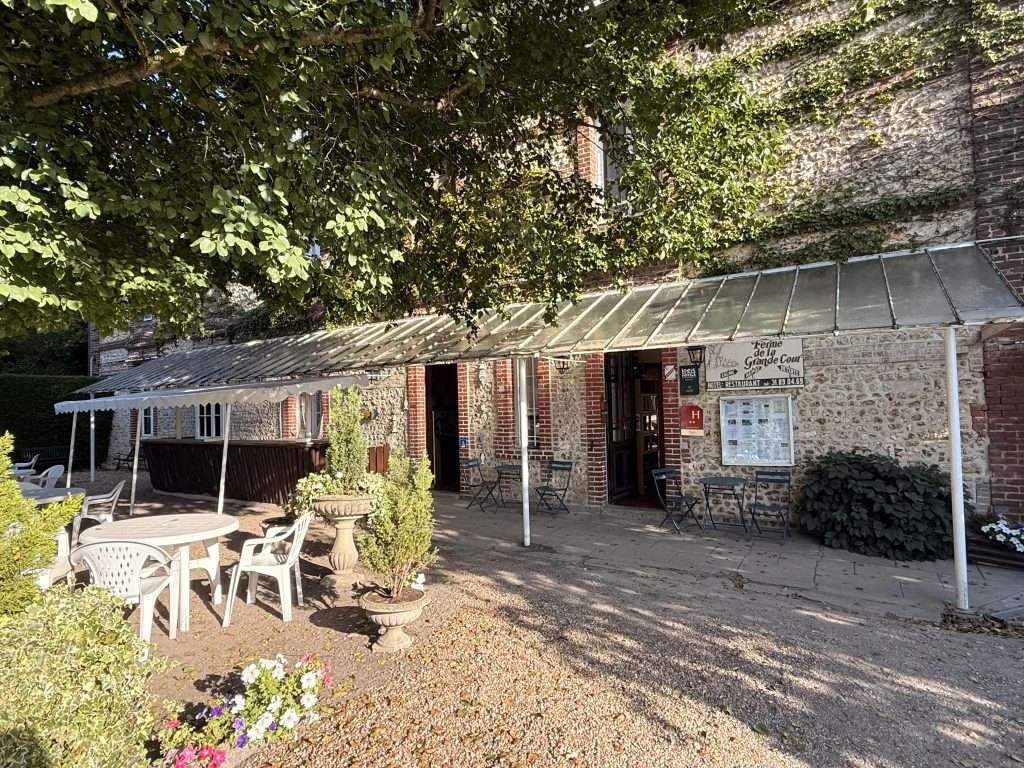
The Hotel Ferme de la Grande Cour is a 2 star 19th Century Inn located 1.5 kilometres outside Honfleur. I have to be honest and state that the rooms here are very basic, but the restaurant is superb which more than made up for the basic facilities.
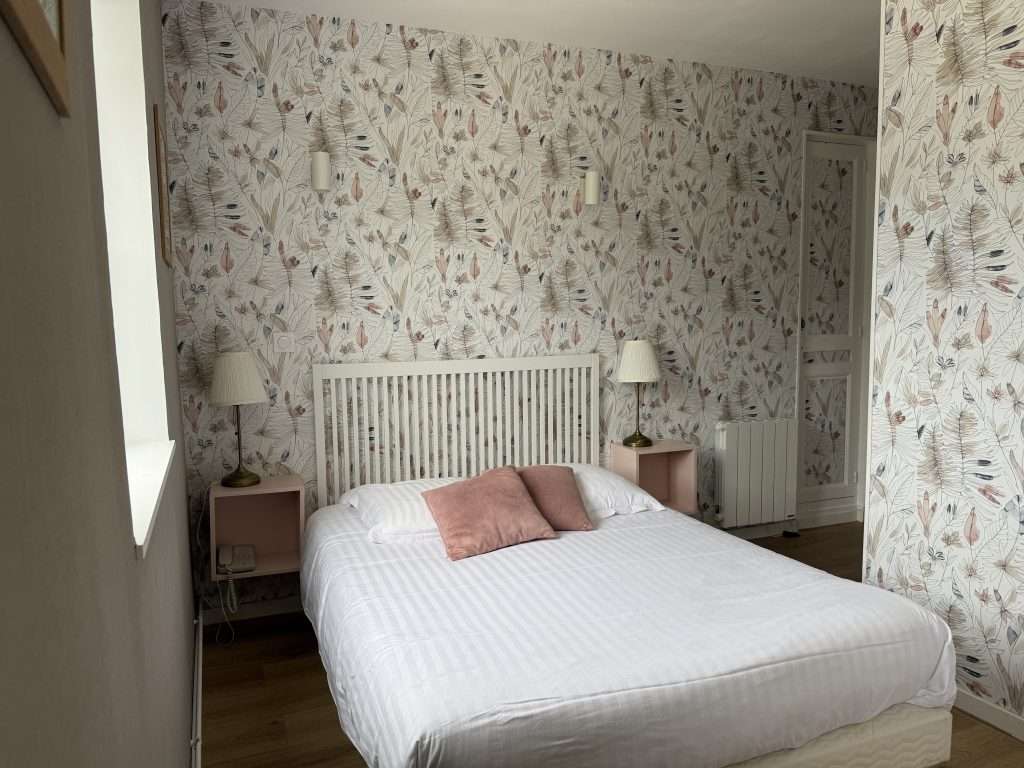
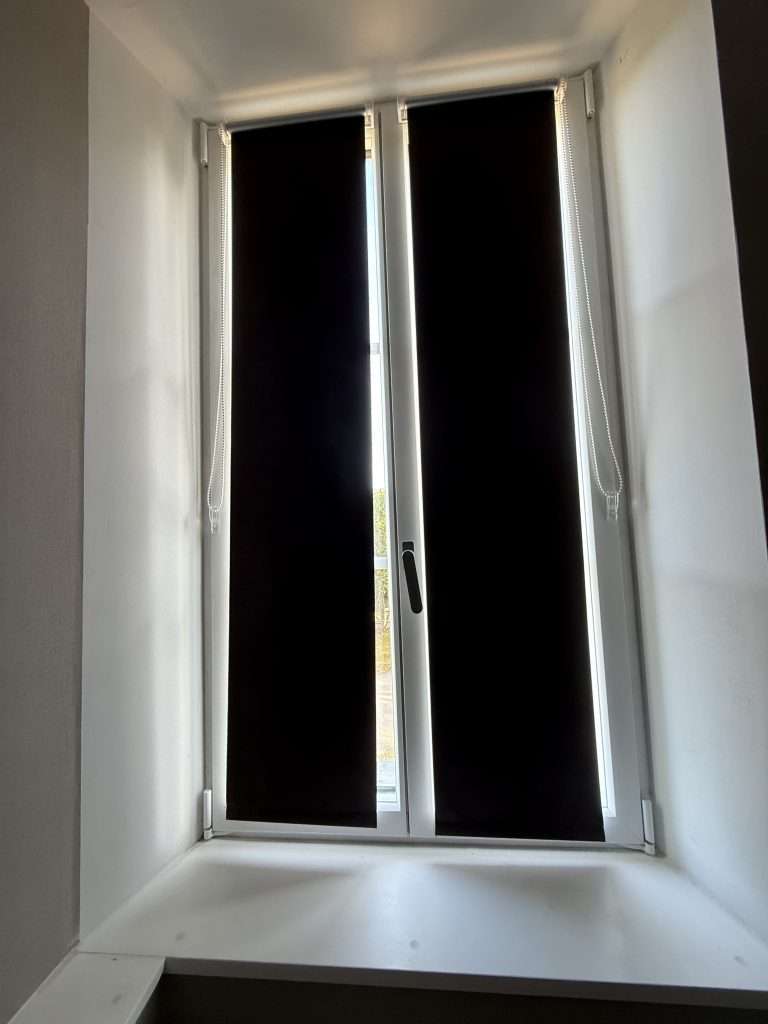
The rooms are small and seem to have been rather squashed into one of the outbuildings. The double rooms we had would be comfortable enough for one, but were awkward for two sharing. The blinds only half covered the window in our room which meant that the room was light until it was dark outside, which is a long time in mid Summer! Don’t expect free bottled water, a kettle in the room etc. either, but for 110 euros per room per night, it is reasonable value. There is a WiFi code, but it doesn’t seem to give access to the internet. The breakfast was adequate and the evening dinner fabulous. The restaurant is closed for dinner on Sundays.
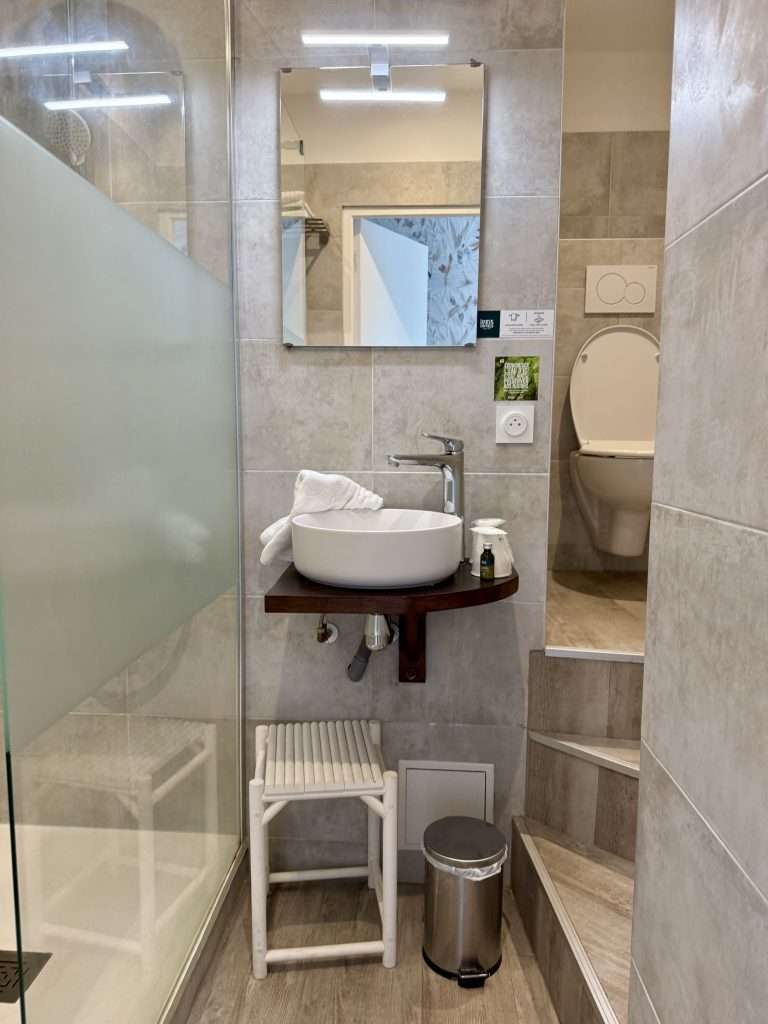
The other thing to bear in mind is that although the hotel is only 1.5 kilometres from the centre of Honfleur, it is a steep walk back uphill, so it takes a good 20-25 minute to walk back from town. On the other hand, the sunny courtyard surrounded by lawns and trees is much more peaceful than staying in the centre of town.
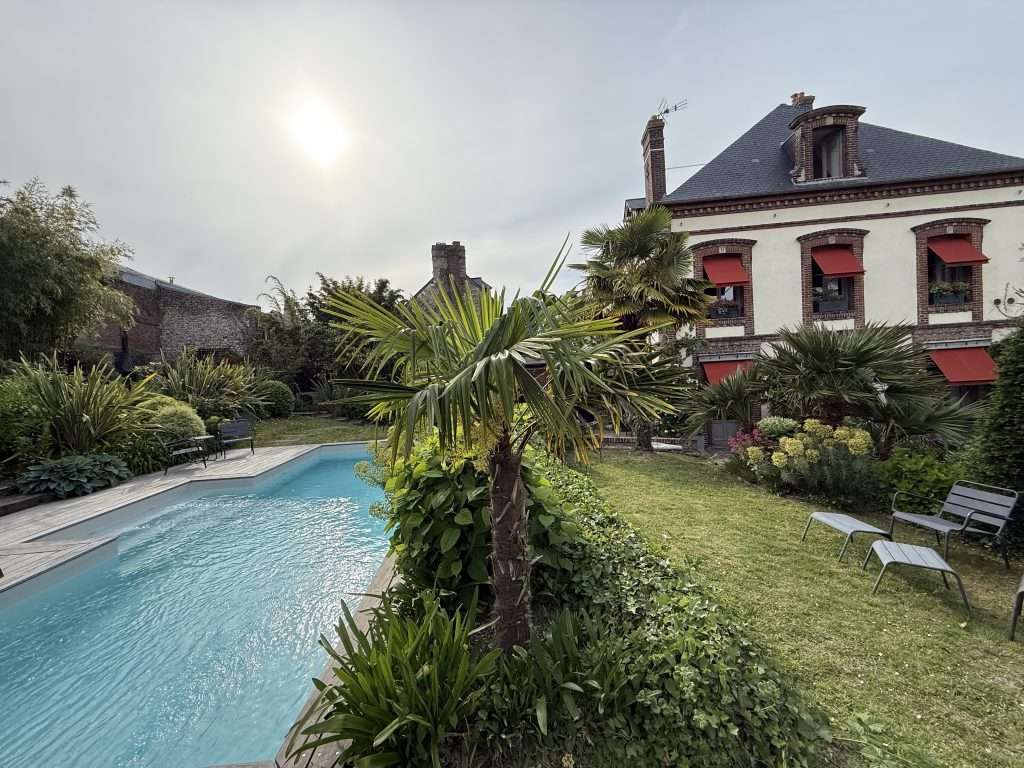
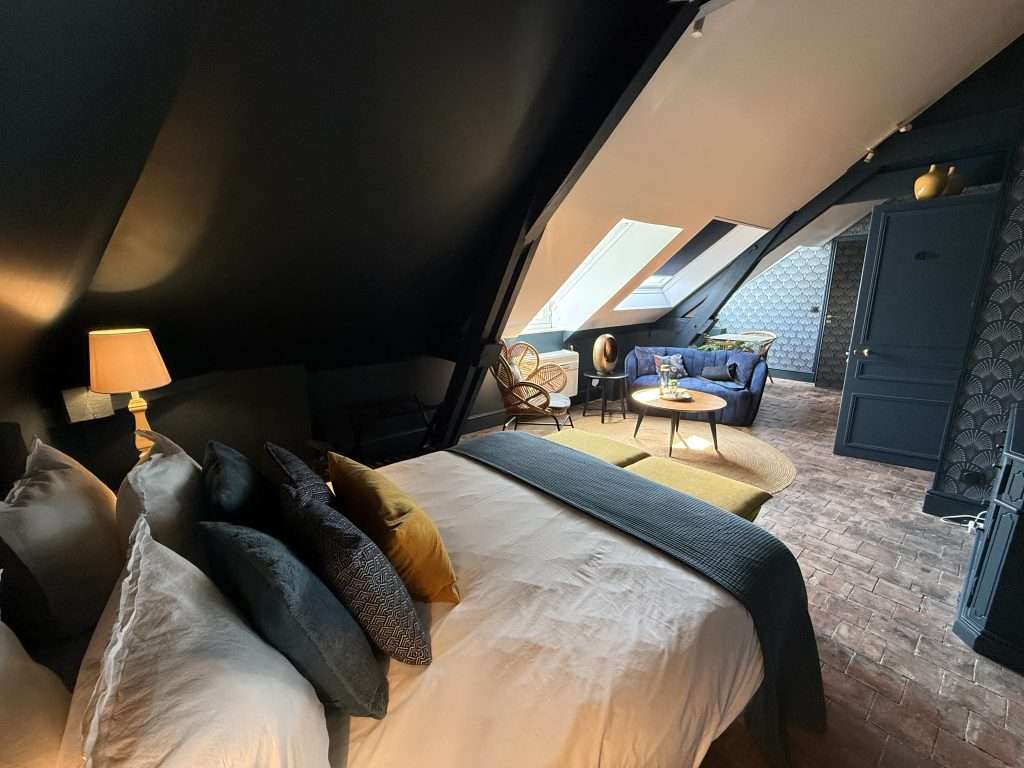
Honfleur - Alternative Hotel - Villa du Cèdre
This level of luxury does come at a price – it will cost you almost double to stay here than the Logis Hotel Ferme de la Grande Cour, so it depends what sort of accommodation you are looking for and what budget you have available. If you do stay here, book directly with the Eric at the hotel for the best price – email: contact@reservit.com
Tips for Future Travellers - Best Time to Visit
We made our trip in late June and the weather was glorious. It is probably best to avoid the couple of weeks on and after the 6th June – the anniversary of D-Day. Honfleur was busy in June – it is always going to be the way with such a charming town I suppose. Our previous visit to Honfleur was in May and the weather was perfect then – a little cooler than in mid Summer and with fewer crowds in Honfleur.
Downloadable PDF Itinerary
A downloadable pdf of the 6 day itinerary is available to subscribers. Please contact me.